
Collection:
Commercial Provers & Holding Cabinets
Commercial provers, retarder provers, and holding cabinets are temperature- and humidity-controlled units that give bakers and chefs precise control over dough fermentation and food holding. From overnight retard-prove cycles for sourdough and viennoiserie through to keeping plated meals at HACCP-safe service temperatures of 60°C–85°C, these units are essential infrastructure for any serious bakery, patisserie, restaurant, hotel, or institutional kitchen.
Hospitality Connect stocks provers, retarder provers, dough proofers, and holding cabinets engineered for everyday production demands — typically 0–35°C with 60–95% humidity range, programmable cycles, stainless steel construction, and configurations to suit standard bakery trays, GN pans, or full roll-in racks.
Used daily by sourdough specialists, wholesale bakeries, banquet kitchens, hospitals, aged care, and pizzerias running cold-retard schedules — talk to our team for fit-out advice, model selection, and trade pricing.
79 products
Filter
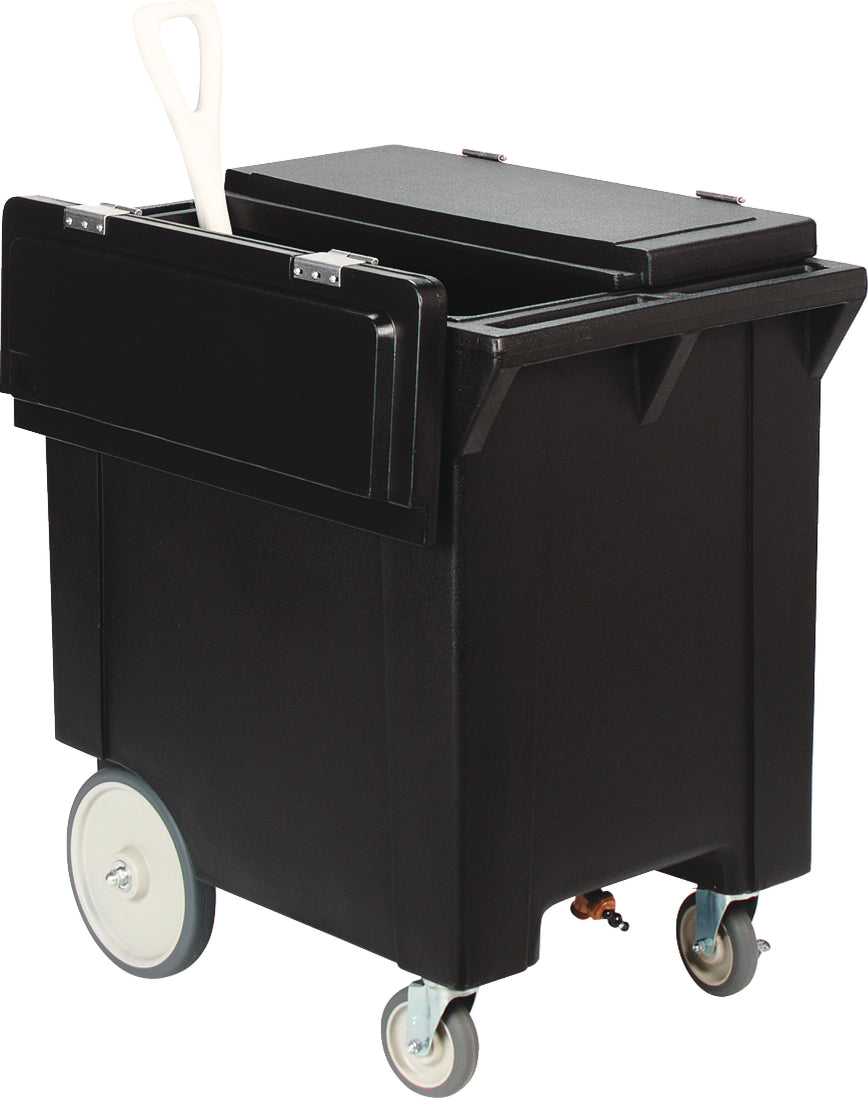
Cambro Ultra Camcarts Food Transport System UPC800SP
Choose your option
Cambro UPC1600 Ultra Camcarts Food Transport System
Choose your option
MODULINE 3 x 1/1GN Bench Model Heated Cabinet
Choose your option
Moduline 3 x 1/1GN Bench Model Heated Cabinet HSH 031E
Choose your option
Moduline 5 x 1/1GN Bench Model Heated Cabinet HSH 051E
Choose your option
Moduline 1 x 1/1GN Static Holding Cabinet with One Drawer HSW 011E
Choose your option
Moduline 2 x 1/1GN Static Holding Cabinet with Two Drawers HSW 012E
Choose your option
Turbofan H8D-UC - 8 Tray 11 GN Digital Electric Undercounter Holding Cabinet
Choose your option
Culinaire Banquet Carts CH.BC.0611.
Choose your option
Turbofan P8M - Full Size Tray Manual Electric Prover And Holding Cabinet
Choose your option
Turbofan H8D-UC - 8 Tray 1/1 GN Digital Electric Undercounter Holding Cabinet
Choose your option
Turbofan H8D-FS-UC - 8 Tray Full Size Digital Electric Undercounter Holding Cabinet
Choose your option
Turbofan H10D-FS - 10 Tray Full Size Digital Electric Holding Cabinet
Choose your option
Turbofan P10M - Half Size Tray Manual Electric Prover And Holding Cabinet
Choose your option
Turbofan P12M - Full Size Tray Manual Electric Prover And Holding Cabinet
Choose your option
Turbofan P85M8 - Prover Holding Cabinet - Full Size 8 Tray Electric Manual Double Stacked
Choose your option
Turbofan P10M - Half Size Tray Manual Electric Prover And Holding Cabinet
Choose your option
Turbofan P85M82 - Full Size 8 Tray Manual Electric Prover Holding Cabinet Double Stacked
Choose your option
Moduline 3 x 1/1GN Static Holding Cabinet with Three Drawers HSW 013E
Choose your option
Turbofan P85M12 - Prover Holding Cabinet - Full Size 12 Tray Electric Manual
Choose your option
MODULINE 3 x 1/1GN Static Holding Cabinet with Three Drawers HSW 013E
Choose your option
Cambro UPCGL1600SP Ultra Camcarts Food Transport System
Choose your option
MODULINE 16 x 1/1GN or 8 x 2/1GN Mobile Heated Cabinet
Choose your option
Turbofan H8T-UC - 8 Tray 11 GN Electric Undercounter Touch Screen Holding Cabinet
Choose your option
Choosing the Right Commercial Provers & Holding Cabinets for Your Business
Provers, retarder provers, and holding cabinets — what's the difference
- Provers (proofers): Heated, humidity-controlled cabinets used solely for the final rise of dough before baking. Ideal for bakeries baking through the day.
- Retarder provers: Combination units that retard (refrigerate) and prove (warm) automatically on a programmed cycle. Best for overnight retard schedules and sourdough operations.
- Holding cabinets: Temperature-controlled cabinets for keeping cooked food at safe serving temperatures (typically 65°C+) — restaurants, banquet kitchens, hospitals, and aged care.
How a retarder prover works
A retarder prover combines refrigeration and proofing in one cabinet. Bakers shape dough at the end of service, load it into the unit, and set a programmed cycle that holds the dough cold overnight (typically 2–4°C) then automatically transitions to a warm humid prove (28–32°C, 75–85% humidity) before opening. The dough is ready to bake when staff arrive.
The retard-prove cycle gives bakers two operational wins: better flavour development from slow cold fermentation, and a labour-flat morning where dough is ready without overnight shifts.
Key features to compare
- Temperature and humidity range: Look for 0–35°C and 60–95% humidity to cover full retard-prove duty plus standard proving.
- Programmable cycles: Set retard time, prove time, and target temperatures so the unit transitions automatically.
- Tray rack compatibility: Most production bakeries spec roll-in racks (40x60cm or 60x80cm); patisseries often run 60x40cm trays.
- Glass vs solid doors: Glass for visual checks during prove; solid for better thermal stability on long retards.
- Holding cabinet specifics: For holding (not proving), check temperature stability at 65–95°C, humidity injection, and recovery time after door opens.
Who uses what
- Bakeries and patisseries: Sourdough specialists, viennoiserie producers, wholesale bakeries — typically a retarder prover for overnight schedules.
- Restaurants: In-house bread programs run a small prover; banquet operations use a holding cabinet for plated service.
- Hotels and banquet kitchens: Holding cabinets to keep hundreds of plated meals at safe service temperatures.
- Institutional foodservice: Hospitals, aged care, schools — central cooking with holding cabinets to bridge cook-to-service times.
- Pizzerias: Provers for dough-ball fermentation.
Pair with
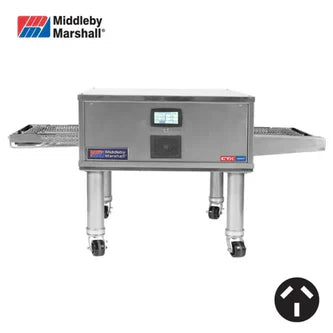
- Deck ovens — the natural baking partner for proved dough.
- Spiral mixers for kneading dough before retarding and proving.
- Dough sheeters and rollers for laminated doughs and batch shaping.
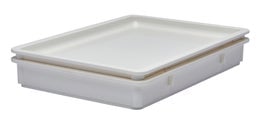
- Dough boxes for bulk fermentation before shaping.
Retarder Prover & Holding Cabinet FAQs
What is a retarder prover?
A retarder prover is a combination cabinet that refrigerates dough overnight (the retard cycle) and then automatically warms it for proving the next morning. It lets bakers prep dough during the day, slow-ferment it overnight for better flavour, and have it ready to bake at the start of service — without overnight shifts.
How does a retarder prover work?
The unit operates on a programmable cycle. You set the retard time (typically 8–12 hours at 0–4°C), then the unit transitions automatically to the prove phase (typically 24–35°C with 70–85% humidity) so dough finishes its final rise just before you arrive. Some models offer multi-stage cycles for more complex schedules.
What's the difference between a retarder prover and a regular prover?
A regular prover only heats — it provides the warm, humid environment needed for the final dough rise before baking. A retarder prover does both: it refrigerates dough first, then proves it. If your bakery only runs same-day production, a regular prover is enough. If you want overnight retard cycles for sourdough or scheduling flexibility, you need a retarder prover.
Do I need a retarder prover for sourdough?
You don't strictly need one — sourdough can be retarded in any commercial fridge — but a retarder prover makes the process repeatable and hands-off. Programmable cycles mean consistent results across batches, and the automatic warm-up means dough is ready to bake at opening time without manual handling.
What temperature should a holding cabinet run at?
HACCP guidelines require hot food to be held above 60°C to prevent bacterial growth. Most commercial holding cabinets are set between 60°C and 85°C depending on the food being held. Wetter foods (stews, curries, sauces) hold well at lower temperatures with humidity; roasted meats and crisp items need higher temperatures with less humidity.
More about Commercial Provers & Holding Cabinets
Why buy provers and holding cabinets from Hospitality Connect
- Penrith showroom and warehouse: Walk-in showroom in Sydney's western corridor — see units, finishes, and capacities before you commit.
- Kept in stock, not drop-shipped: Most ranges are warehoused in Australia for fast metro dispatch and reliable lead times across NSW, VIC, QLD, SA, and WA.
- Trade accounts welcome: Restaurants, hotels, café groups, caterers, and multi-site operators get volume pricing on ongoing supply and fit-outs.
- Hands-on product advice: Decades of trade experience on the team — we'll talk you through GN compatibility, voltage, gas vs electric, and whether you really need the bigger model.
- End-to-end fit-out coordination: From single-piece replacements to whole-kitchen specifications — bundled equipment quotes for builders and operators.
- Backed by manufacturer warranty: All commercial equipment ships with full Australian manufacturer warranty and serviceable spare parts supply.
Prover and holding cabinet care
- Calibrate temperature monthly: Use an independent probe to verify the cabinet temp matches the readout — drift over time is common.
- Clean humidity nozzles: Mineral build-up from tap water clogs humidity injectors — descale quarterly with food-safe descaler.
- Inspect door seals weekly: Damaged seals lose temperature fast and waste energy — replace at the first sign of cracking.
- Don't overload trays: Air circulation matters — overpacking degrades prove or hold consistency.
- Defrost retarder cycle annually: Even auto-defrost units benefit from a manual full-defrost once a year to clear evaporator coils.
- Test door switches: Door-open alarms and interlocks save spoiled batches — verify they trigger every quarter.
Need help choosing? Talk to us
Get in touch with our trade team for sizing advice, GN configuration help, or a project quote. Drop into the Penrith showroom for a hands-on look, or set up a trade account for ongoing supply across your venues. Sydney metro dispatch is fast and we freight nationwide.