

Pizza Oven Temperature Guide: Ideal Cooking Temperatures for Every Style
Pizza oven temperature is the single biggest variable in cooking quality pizza. Too low and you get a pale, soggy base. Too high without the right technique and you burn the crust before the cheese melts. Every pizza style — from Neapolitan to New York to frozen — has an ideal temperature range, and every oven type delivers heat differently. This guide gives you the numbers and explains why they matter.
Why Pizza Oven Temperature Matters
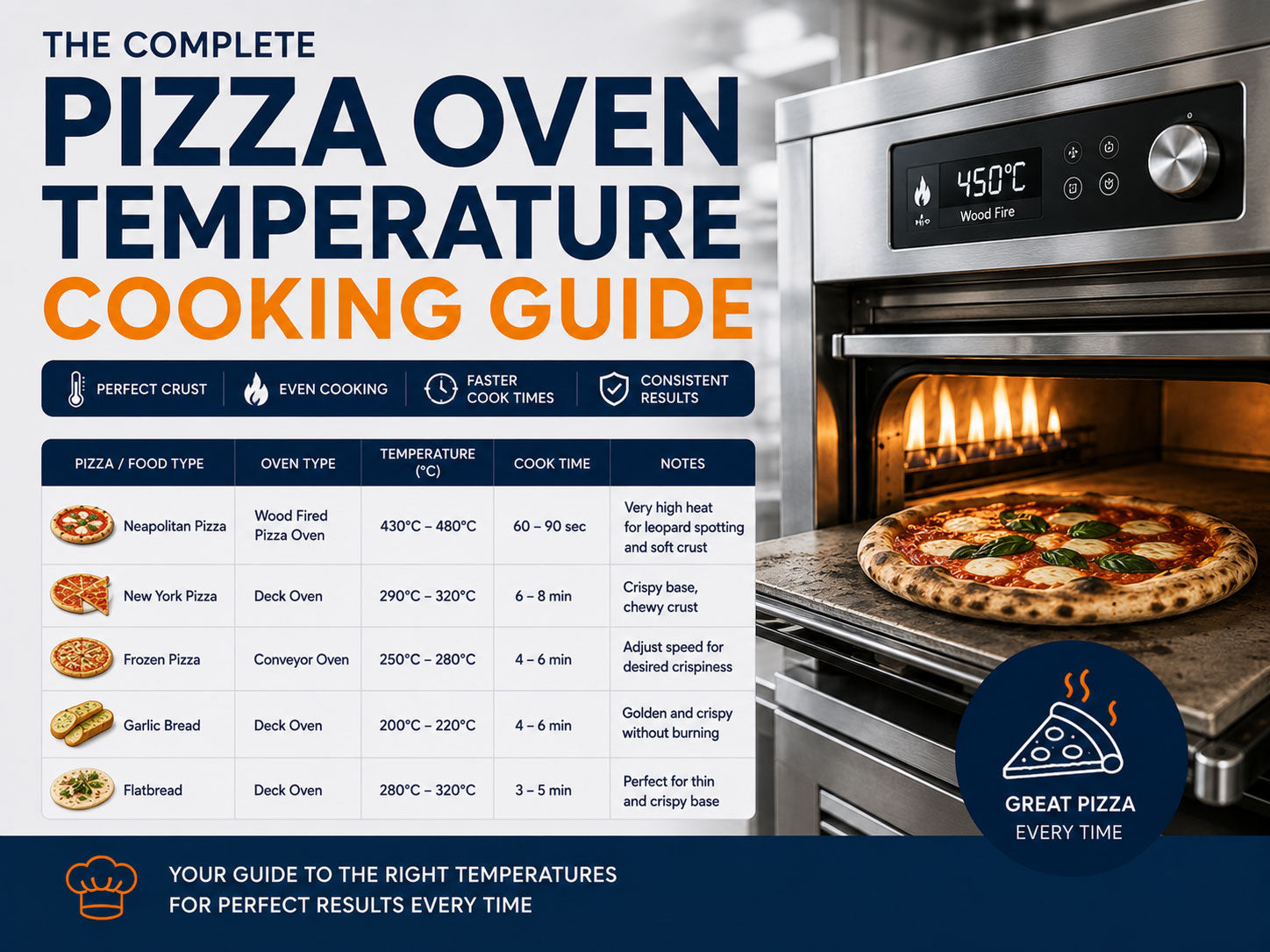
Pizza cooks through a combination of radiant heat (from the oven walls and ceiling), conductive heat (from the stone or deck directly below the pizza), and convected heat (moving hot air). High-temperature ovens (400°C+) cook pizza extremely fast — the Neapolitan 90-second cook time is only possible at 430–480°C. Lower-temperature ovens (220–320°C) take longer and produce different results — a crispier, drier base and more evenly cooked toppings.
Pizza Temperature Guide by Style
| Pizza Style | Oven Type | Temperature Range | Cook Time | Notes |
|---|---|---|---|---|
| Neapolitan (VPN) | Wood-fired dome | 430–480°C | 60–90 seconds | Floor temp critical; rotate pizza at 30–45 sec; leopard charring on crust is correct |
| Neapolitan-style (gas) | High-temp gas dome oven | 380–430°C | 90–180 seconds | Stone/refractory floor essential; acceptable for volume service |
| New York style | Deck oven | 280–320°C | 6–10 minutes | Large diameter, thin base; stone deck adds crispness |
| Roman / thin & crispy | Deck oven | 300–340°C | 5–8 minutes | Very thin base; watch edges carefully |
| Chicago deep dish / pan pizza | Deck or conveyor oven | 220–250°C | 25–40 minutes | Lower temp prevents outer crust burning before inside cooks through |
| Sicilian / focaccia-style | Deck or convection oven | 230–260°C | 20–30 minutes | Thick dough; oil-lined pan; base should be fried-crispy |
| Frozen pizza (commercial) | Conveyor or deck oven | 220–250°C | 8–14 minutes | Follow manufacturer spec; conveyor speed adjustment typically more precise than temp |
| Garlic bread / sides | Any oven | 180–200°C | 5–8 minutes | Lower temp prevents over-browning; fan-forced — reduce temp by 10–15°C |
| Calzone | Deck or convection oven | 220–250°C | 10–15 minutes | Vent with a knife cut before serving; internal temp must reach 75°C |
Deck vs Conveyor vs Wood-Fired: Temperature Differences
| Oven Type | Temperature Range | Heat Source | Stone/Deck | Best For | Commercial Throughput |
|---|---|---|---|---|---|
| Wood-fired dome | 350–500°C+ | Wood combustion — radiant + convective | Refractory stone floor | Neapolitan, artisan, high-theatre service | Low–medium; skill-dependent |
| Gas dome / high-temp gas | 300–450°C | Gas burner — radiant + convective | Refractory or stone floor | Neapolitan-style, fast casual | Medium; more consistent than wood |
| Electric deck oven | 150–400°C | Electric elements top and bottom | Refractory or ceramic deck | New York, Roman, artisan, bakery | Medium–high; excellent control |
| Gas deck oven | 150–380°C | Gas burner under deck | Stone or ceramic deck | New York, volume pizza, bakery crossover | Medium–high; lower running cost than electric |
| Conveyor oven | 180–320°C | Top and bottom elements + air impingement | Mesh belt (no stone) | Frozen pizza, fast food, consistent volume | Very high; fully automated once dialled in |
| Convection oven | 160–280°C | Fan-circulated hot air | None (rack tray) | Pan pizza, calzone, garlic bread, sides | Medium; not ideal for artisan pizza |
Common Pizza Cooking Mistakes
| Mistake | What Happens | Fix |
|---|---|---|
| Underpreheat the oven / deck | Soggy, pale base; uneven cook; base sticks to deck | Allow full preheat — 45–60 min for stone deck; 30 min minimum for conveyor |
| Overloading with toppings | Base can't cook through; watery toppings steam the base | Drain wet ingredients; don't exceed topping depth guidelines |
| Not rotating in a deck oven | Uneven cook — closer-to-flame side burns | Rotate 180° halfway through cook |
| Sauce too wet / too thick | Wet sauce = steam from below; thick sauce = cold centre | Reduce sauce; apply in a thin, even layer leaving a border |
| Dough straight from the fridge | Cold dough doesn't stretch; tears; cooks unevenly | Rest dough at room temperature 30–60 min before pressing |
| Wrong oven for the pizza style | Neapolitan in a conveyor won't blister; deep dish in a wood-fired burns externally | Match oven type to pizza style |
Choosing a Commercial Pizza Oven
For Neapolitan or artisan pizza: A high-temperature gas dome oven or wood-fired oven is the correct choice. Look for units with refractory stone floors rated to at least 400°C.
For high-volume standard pizza: An electric or gas deck oven with two or more decks gives consistent quality. Independent top and bottom element controls let you fine-tune heat balance.
For fast food or frozen pizza operations: A conveyor oven is the clear choice. Once time and temperature are dialled in, any staff member can operate it.
For small venues or cafés adding pizza to an existing menu: A countertop deck oven or single-deck commercial pizza oven is a cost-effective entry point. Many run on standard single-phase power.
Browse Commercial Pizza Ovens at Hospitality Connect
Deck ovens, conveyor ovens, high-temp gas dome ovens and countertop models — stocked and ready for Australian kitchens.
Shop Pizza Ovens

