
Skip to content

30 Years Experience  •  Price Match Guarantee  •  Email Us  •  1300 089 974

Teppanyaki Plates

Collection: Teppanyaki Plates

Bring the art of Japanese grilling to your commercial kitchen with our professional teppanyaki equipment. Designed for high-performance cooking, these grills feature a smooth, flat iron surface that delivers even heat across the entire plate. Perfect for preparing meats, seafood, vegetables, rice, and eggs, teppanyaki grills allow for both high-speed service and interactive cooking experiences.

Built from heavy-duty stainless steel, our commercial teppanyaki grills are engineered for durability, hygiene, and ease of cleaning. Options include gas and electric models, benchtop units for compact spaces, and full-sized freestanding systems for high-volume operations. Many models offer adjustable heat zones, integrated splash guards, and optional built-in ventilation for seamless kitchen integration.

Whether you run a Japanese restaurant, hotel buffet, or catering service, teppanyaki equipment delivers unmatched cooking flexibility, showmanship, and customer appeal

26 products

VERR Teppanyaki Hotplate 900mm Bench Mounted VTEP-9 BM. - Hospitality Connect

Verr

Teppanyaki

VERR Teppanyaki Hotplate 900mm Bench Mounted VTEP-9 BM.

Regular price $6,027.31
Sale price $6,027.31 Regular price $8,036.41
VERR Teppanyaki Hotplate 900mm Cabinet Mounted VTEP-9. - Hospitality Connect

Verr

Teppanyaki

VERR Teppanyaki Hotplate 900mm Cabinet Mounted VTEP-9.

Regular price $6,314.13
Sale price $6,314.13 Regular price $8,418.84

Choosing the Right Teppanyaki Plates for Your Business

Teppanyaki plates and grills are smooth flat-iron cooking surfaces for Japanese-style high-temperature cookery - meats, seafood, vegetables, rice and eggs cooked in front of guests. Hospitality Connect supplies teppanyaki equipment from Goldstein, Anvil, Cookrite and other commercial brands - in countertop and built-in formats with gas and electric heating, in 600-1800mm widths.

Types of teppanyaki equipment

  • Countertop teppanyaki grills: 600-900mm wide units; for cafés, food trucks and small Japanese restaurants.
  • Built-in teppanyaki tables: Full guest-facing teppanyaki bars with integrated extraction; the destination-restaurant format.
  • Gas teppanyaki plates: Faster heat recovery; LPG or natural gas fired with thermostat control. Most authentic.
  • Electric teppanyaki plates: 240V or 415V three-phase; precise temperature control and easier installation.
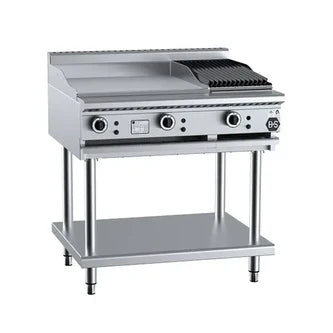
  • Combination teppanyaki and grill: Half flat plate, half grooved grill; for venues offering both teppanyaki and char-grill items.

Sizing throughput

Teppanyaki plate width is the throughput driver: 600mm cooks for 4-6 guests at a time; 900mm for 8-10; 1200mm+ for 12-15 guests. For full guest-facing teppanyaki tables, plan one chef per 8-10 covers - the show is the experience and one chef cooks for one table. Plate gauge and material matter: 12-15mm steel plates retain heat under repeated cold-protein drops; thinner plates cool quickly and produce inconsistent sear. Power: 600mm electric runs 15A 240V; 900mm typically 32A or three-phase 415V; gas units depend on burner count.

Operating notes

  • Season the plate: Season iron and steel plates with neutral oil before first service; re-season weekly for non-stick performance.
  • Mind the grease channel: Empty grease tray every hour during service; full trays overflow and create slip hazards.
  • Spatula choice: Wide flat spatulas and a long-handle scraper; sharp edges scar the steel surface.
  • Don't pour cold water on hot plate: Warps the plate permanently; cool naturally then clean.
  • Extraction hood: High smoke and steam yield; Type 1 grease-extracting hood mandatory; council-approved exhaust required.

Specifier checklist for teppanyaki installation: confirm extraction hood capacity (teppanyaki produces high steam and smoke during peak cookery); confirm gas connection or three-phase electrical; for guest-facing tables, plan front-of-house aesthetic (visible cooking surface, side seating, integrated waste); chef training on teppanyaki technique (different from griddle and char-grill cookery). For destination-restaurant operations, two chefs minimum at peak - one cooking, one prepping - and dedicated mise en place reach-in fridges within arms reach. Stock spare plates and grease-tray inserts as service consumables.

Pair with

Combine with benchtop griddles, lava rock wood fire solid fuel grills and induction cooktops for full Asian and grill setups.

More about Teppanyaki Plates

Why buy teppanyaki plates from Hospitality Connect

  • Curated for Australian commercial kitchens: Every line is selected against the realities of AU service — voltage, room dimensions, council rules, ambient temperatures.
  • Brand-direct relationships: We deal directly with manufacturers and importers, so you get current models and the right parts when you need them.
  • Field-tested specs: Sizes, gauges and capacities listed on each product reflect what actually works in service, not glossy brochure numbers.
  • Tech support that picks up: Pre and post-sale phone lines staffed by people who know commercial kitchens.
  • Warranty handled here: We process the claim with the manufacturer; you keep cooking.

Teppanyaki plates care and longevity

  • Track TPM (total polar materials): A simple oil tester flags when oil should be discarded — usually 24–27% TPM.
  • Inspect heating elements monthly: Crusted elements run hot in patches and create hot spots that scorch food.
  • Check thermostat calibration quarterly: A 10°C drift wastes oil and produces inconsistent product.
  • Replace door gaskets when squashed: Loose seals leak heat and cycle the thermostat constantly.
  • Clean drain valves: Sediment cakes the valve and chokes oil flow on filter day.

Need help choosing? Talk to us

Our commercial chefs and fit-out specialists can match the right teppanyaki plates to your menu, footprint and operating budget. Send through your floor plan, service brief or trading hours, or call our Australia-based trade line for a same-day spec quote — we'll line up sizes, brands, voltage and gas requirements, lead times and freight rates before you commit. If you're fitting out a new venue or refurbishing an existing one, ask about multi-line trade pricing and consolidated delivery so the kit lands when the trades do, not weeks later.