



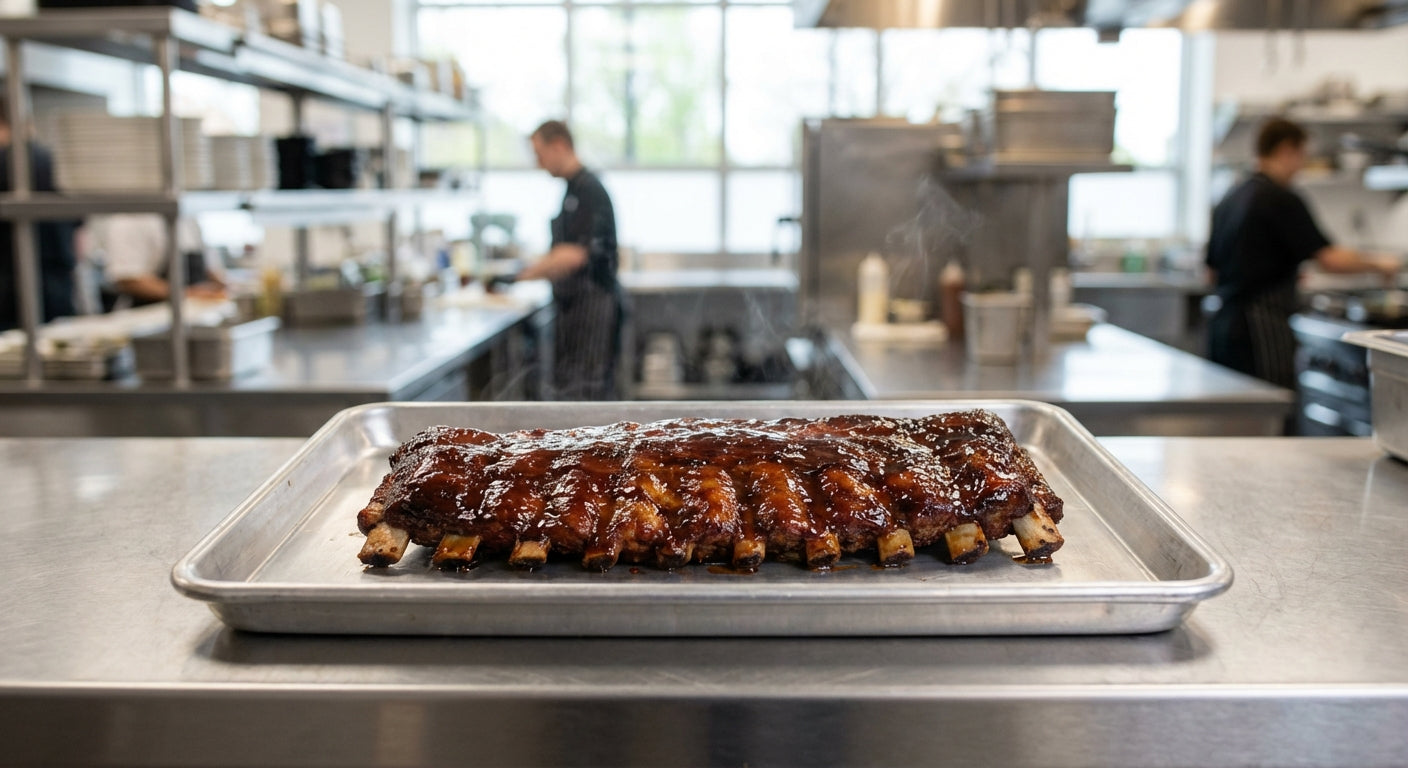
Fall-off-the-bone tenderness, rich smoky flavour, and perfect caramelisation — all using professional chef equipment.
If you've ever wondered how restaurants make pork ribs that are so tender they nearly fall apart, yet still have that perfectly glazed, flavour-packed finish, you're about to learn the secret. The key is proper preparation, precise cooking control, and using the same reliable commercial cooking equipment the professionals use behind the pass.
In this recipe, we combine all three — and show you how to create unforgettable pork ribs using a professional boning knife, a combi oven, and commercial-grade baking trays.
Key Takeaways
- Removing the membrane is essential for tender, flavourful ribs
- Combi ovens combine steam and dry heat for restaurant-quality results
- Low-temperature cooking (120°C) for 2.5–3 hours ensures juicy meat
- High-heat finishing caramelises BBQ sauce for glossy presentation
- Commercial-grade equipment guarantees consistent, professional outcomes
Why This Method Makes Better Ribs Than Most Restaurants
This recipe uses proven commercial-kitchen techniques supported by chef-preferred tools. Professional kitchens rely on three critical elements: precision knife work, controlled cooking environments, and reliable cookware.
🔪 Professional Boning Knife – Essential for Removing Rib Skin
Removing the silverskin (membrane) is crucial for tender ribs. A sharp, flexible boning knife slices cleanly under the membrane, helping you pull it off quickly and safely with no tearing.
This single step makes the difference between tough, chewy ribs and restaurant-quality tenderness that allows seasoning to penetrate the meat.
🔥 Combi Oven – Professional Precision at Home
Combi ovens combine steam and dry heat for unmatched control. Steam keeps your ribs juicy during the long cooking process, while dry heat builds flavour and bark — resulting in restaurant-level tenderness.
This dual-function capability is why commercial kitchens invest in combi technology. It eliminates guesswork and delivers consistent results every service.
🥘 Commercial-Grade Baking Trays – Professional Performance
Commercial baking trays can handle heavy ribs, high heat, and long cook times. Superior heat distribution ensures even cooking, caramelisation, and no burnt spots.
Thin domestic trays warp under sustained heat and create hot spots. Professional-grade trays maintain their structure and conduct heat evenly across the entire surface.
🍖 Ingredients
- 2 full racks pork ribs
- 2 tbsp smoked paprika
- 1 tbsp garlic powder
- 1 tbsp onion powder
- 2 tbsp brown sugar
- 1 tsp mustard powder
- 1 tsp salt
- 1 tsp cracked black pepper
- 1 tbsp olive oil
- Your favourite BBQ sauce
🔪 Step 1: Remove the Membrane Using a Boning Knife

The silverskin on the back of the ribs becomes chewy if left on. This thin, translucent membrane prevents seasoning penetration and creates an unpleasant texture.
Use the pointed edge of a sharp boning knife to slide under one corner of the membrane. Grip with a paper towel and pull off in one smooth motion.
Why remove it?
- Makes ribs more tender
- Allows flavour to penetrate
- Prevents a rubbery texture
- Enables even seasoning on both sides
🌶️ Step 2: Apply the Dry Rub
Mix all dry ingredients in a bowl until thoroughly combined. The brown sugar balances the savoury spices and aids caramelisation during the high-heat finish.
Massage the rub into both sides of the ribs, ensuring complete coverage. Let rest 20–60 minutes at room temperature, or overnight in the fridge for deeper flavour penetration.
Place the ribs on a commercial-grade baking tray — strong enough to hold heavy cuts and ensure even heat distribution throughout the cooking process.
♨️ Step 3: Slow Cook in the Combi Oven

This step is where your ribs become melt-in-your-mouth tender. The combination of steam and dry heat breaks down connective tissue while maintaining moisture.
Combi Oven Settings:
| Setting | Value |
|---|---|
| Temperature | 120°C |
| Humidity | 60% steam / 40% dry heat |
| Cook Time | 2.5–3 hours |
The combi oven maintains consistent humidity and temperature throughout the cooking cycle, eliminating the risk of dryness or uneven cooking.
This controlled environment is why professional kitchens can serve perfect ribs during every service, regardless of volume or timing.
🍯 Step 4: Glaze & Caramelise

Remove the ribs from the oven and brush generously with BBQ sauce on both sides. The ribs should be tender at this point, with the meat pulling back from the bone ends.
Switch the oven to 200°C, dry heat only, and roast for 10–15 minutes until the sauce caramelises. Watch carefully during this stage — the sugar in the sauce can burn quickly.
Using commercial-grade bakeware ensures even browning without burning, as the heavy-gauge material distributes intense heat uniformly.
🍽️ Step 5: Rest & Slice

Let the ribs rest for 5–10 minutes after removing from the oven. This allows juices to redistribute throughout the meat, preventing dry streaks when you slice.
Slice between bones using a sharp knife for clean, professional presentation. Each portion should separate easily if the ribs are properly cooked.
Serve with coleslaw, chips, grilled corn, or your favourite sides. The combination of tender meat, smoky rub, and caramelised glaze delivers restaurant-quality results.
🔥 Chef Tips for the Best Ribs
- Removing the membrane is non-negotiable for tender results
- Slow low-temperature steaming keeps ribs juicy throughout cooking
- A high-heat finish creates sticky, glossy caramelisation
- Letting ribs rest prevents moisture loss when slicing
- Using a combi oven ensures consistency every time
- Commercial baking trays prevent warping and hot spots
- Apply sauce only after slow cooking to prevent burning
Cooking Method Comparison
| Method | Time | Result |
|---|---|---|
| Combi Oven (60% steam) | 2.5–3 hours | Restaurant-quality: tender, juicy, consistent |
| Standard Oven (covered) | 3–3.5 hours | Good: requires monitoring, less consistent |
| BBQ Smoker | 4–6 hours | Excellent flavour: weather-dependent, high skill |
❓ FAQ: How to Make the Best Pork Ribs
1. Why do I need to remove the membrane?
It helps the seasoning penetrate and prevents a tough, chewy texture. The membrane acts as a barrier that blocks flavour and creates an unpleasant rubbery layer. A sharp boning knife makes this step simple and safe.
2. Do I need a combi oven for restaurant-quality ribs?
A combi oven is ideal because the combination of steam and dry heat guarantees tender, evenly cooked ribs. However, you can adapt the recipe for a standard oven by adding a water tray for moisture and covering the ribs with foil.
3. How long do pork ribs take to cook?
Using a combi oven: 2.5–3 hours at 120°C with steam. Standard oven: 3–3.5 hours covered with foil at 150°C. The meat should pull back from the bone ends when done.
4. What baking tray should I use?
Commercial-grade baking trays ensure even heat distribution and prevent burning during caramelisation. They're designed to withstand sustained high temperatures without warping, unlike thin domestic trays.
5. Which knife is best for rib preparation and slicing?
A boning knife — designed for precision, flexibility, and effortless trimming. The thin, sharp blade slides under membranes and between bones for clean separation.
6. Can I make the ribs ahead of time?
Yes. Slow cook them a day ahead, refrigerate, and caramelise just before serving. This actually improves flavour as the rub has more time to penetrate the meat.
7. What BBQ sauce works best?
Sweet and smoky sauces caramelise beautifully at high heat, creating glossy, sticky ribs. Look for sauces with molasses or brown sugar as the base for best results.
Ready to Cook Restaurant-Quality Ribs?
Now you have the complete method professionals use to create fall-off-the-bone pork ribs. The combination of proper technique and commercial-grade equipment makes consistent, restaurant-quality results achievable in any kitchen.
From membrane removal to precise temperature control, each step builds toward tender, flavourful ribs with perfect caramelisation. Whether you're cooking for family or preparing for service, this method delivers every time.
Explore our full range of professional cooking equipment and commercial cookware to bring restaurant techniques into your kitchen.


