

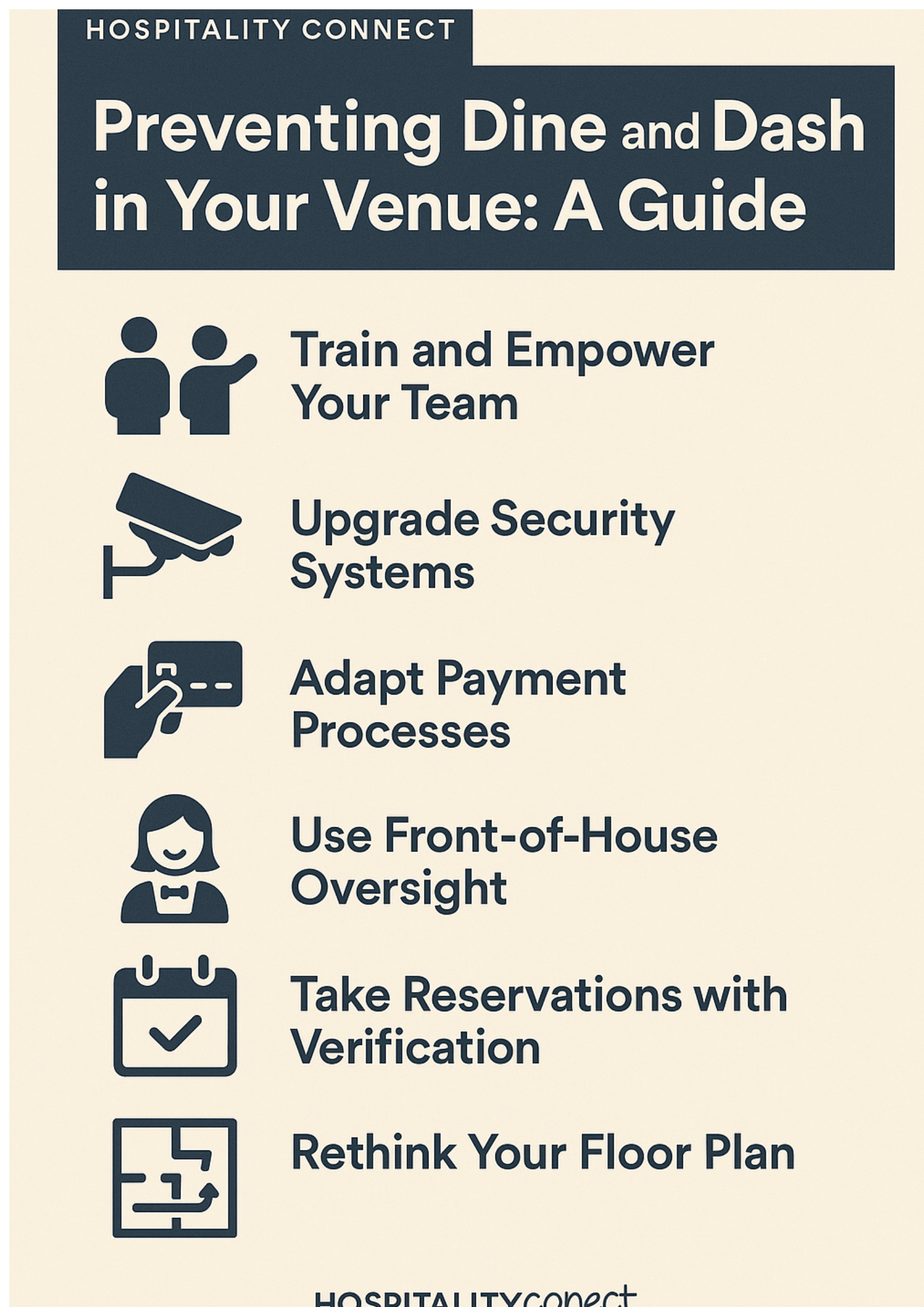
When a customer leaves without paying their bill—commonly known as dine and dash—it doesn't just mean lost revenue. These incidents impact your team's morale, disrupt daily operations, and create tension within your venue. For Australian hospitality businesses, preventing dine and dash is a critical part of restaurant security, guest management, and overall loss prevention.
Dine and dash incidents are unfortunately common, but with the right systems and staff training in place, you can significantly reduce the risk. Below, we've outlined expert strategies and industry best practices to help hospitality venues protect themselves while maintaining a safe, professional environment for both guests and staff.
Key Takeaways
- Dine and dash is a criminal offense that can result in fines or imprisonment
- Staff training and visible front-of-house oversight are your first line of defense
- Modern payment systems and surveillance technology significantly reduce risk
- Strategic floor planning and reservation systems add protective layers
- Quick response protocols minimize damage when incidents occur
What Is Dine and Dash?
Dine and dash refers to the act of leaving a restaurant or café without paying for a meal. It's a form of theft that can seriously damage a venue's reputation and bottom line.
Beyond the immediate financial loss, repeat incidents can affect customer trust, staff confidence, and insurance costs. For busy venues with high table turnover, even a few unpaid bills per month can add up to significant annual losses.
Is Dine and Dash Illegal in Australia?
Yes. Dine and dash is a criminal offense—classified as "theft of services" or "defrauding an innkeeper" under Australian law. Depending on the amount unpaid, the act can lead to fines or even imprisonment.
Venues that experience recurring dine and dash incidents may also face higher operational risks and insurance premiums, making proactive prevention essential for long-term business sustainability.
How to Stop Dine and Dash: Proven Strategies for Hospitality Businesses
We work with venues across Australia to strengthen their operational systems and reduce theft. Here are proven ways to minimize dine and dash incidents in your restaurant or café.
1. Train and Empower Your Team
Train your staff to recognize suspicious behaviour and engage guests with confidence. A well-trained team that builds rapport with customers naturally discourages theft and fosters a welcoming environment.
Key training areas should include greeting protocols, table monitoring frequency, payment process explanations, and what to do if they suspect a potential incident. Role-playing scenarios during staff meetings can build confidence and preparedness.
2. Upgrade Security Systems
Modern surveillance and smart POS integration for cafés can make a significant difference. Install discreet cameras at key entry and exit points, and use real-time monitoring tools to detect irregular transactions or guest movements.
Digital security systems not only deter potential offenders but also provide valuable evidence if an incident occurs. Many insurance providers offer reduced premiums for venues with comprehensive surveillance coverage.
3. Adapt Payment Processes
Consider introducing pre-payment options, credit card holds, or QR-based ordering systems. Digital solutions not only streamline service but also reduce the opportunity for unpaid bills.
For higher-value orders or large groups, requesting payment information upfront—particularly for hotel restaurants and event bookings—adds an essential protective layer without compromising guest experience.
4. Use Front-of-House Oversight
A visible host or floor manager near entry points adds a strong deterrent. They can greet guests, oversee traffic flow, and identify potential issues early.
This team member should maintain awareness of which tables have been seated, served, and paid. Simple tracking systems—whether digital or on paper—help prevent gaps in service that create opportunities for theft.
5. Take Reservations with Verification
Encourage reservations that collect guest contact details or payment information upfront. Not only does this enhance guest experience through better table management, it adds a protective layer for your business.
For high-demand venues or special events, requiring a credit card to hold the reservation is now standard practice and widely accepted by customers.
6. Rethink Your Floor Plan
Improve sightlines and reduce blind spots so staff can easily monitor guest areas. Strategically position exits, registers, and service stations to make it harder for guests to leave unnoticed.
If you're setting up a new venue or renovating, work with designers who understand operational security. The layout of your commercial work areas and dining spaces should support both efficiency and oversight.
Prevention Strategy Comparison
| Strategy | Cost | Effectiveness | Implementation Time |
|---|---|---|---|
| Staff Training | Low | High | 1-2 weeks |
| Security Cameras | Medium | High | 1-3 days |
| Digital Payment Systems | Medium | Very High | 1-2 weeks |
| Floor Plan Redesign | High | Medium | 2-4 weeks |
| Reservation Verification | Low | Medium | Immediate |
| Front-of-House Manager | Medium | High | Immediate |
What to Do If a Dine and Dash Occurs
Despite your best prevention efforts, incidents may still occur. Having a clear response protocol protects your business and helps authorities track repeat offenders.
If a customer leaves without paying, follow these steps:
Stay Calm and Gather Details
Record the time, physical description of the individuals, table number, and items ordered. Review any security footage immediately while the incident is fresh.
Document everything in writing, including which staff members were working the area and any unusual behaviour noticed before the incident.
Contact Authorities Promptly
File a police report and provide all collected evidence to assist with identification. Include CCTV footage, transaction records, and witness statements.
Having detailed documentation strengthens your case and demonstrates professional management if the matter escalates or becomes part of an insurance claim.
Notify Nearby Venues
Alert local businesses and hospitality networks to be on the lookout for repeat offenders. Many regions have WhatsApp groups or Facebook communities where venue managers share security information.
This collaborative approach benefits the entire hospitality community and has proven effective in identifying and preventing serial offenders.
Review Internal Security Procedures
Identify weak points in staffing, layout, or policy that allowed the incident to occur. Use each incident as a learning opportunity to strengthen your systems.
Hold a brief team meeting to discuss what happened and reinforce prevention protocols without placing blame on individual staff members.
Dine and Dash Frequently Asked Questions
Is Dine and Dash a Felony?
In Australia, dine and dash is classified under state and territory theft laws. The severity depends on the amount stolen—larger unpaid bills may result in more serious criminal charges and penalties including fines or imprisonment.
Are Staff Responsible for Unpaid Bills?
Generally, no. Under most employment laws in Australia, employers cannot deduct losses from employee wages if it reduces pay below minimum wage. The responsibility for prevention lies with management systems and business procedures, not individual servers.
Is Dine and Dash Common in Australia?
Unfortunately, yes—especially in busy venues during peak periods or in understaffed operations. However, consistent training, smart payment systems, and vigilant management can reduce incidents by 70% or more compared to venues without formal prevention strategies.
What About Online Order Theft?
"Virtual dine and dash" cases—such as false non-delivery claims on platforms like Uber Eats or Deliveroo—are on the rise. Protect your burger shop or pizza venue by using digital proof-of-delivery systems, photo documentation, and accurate GPS tracking.
Additional Risk Reduction for Different Venue Types
Different hospitality venues face unique challenges when it comes to theft prevention. Understanding your specific risk factors helps you implement targeted solutions.
| Venue Type | Primary Risk Factor | Best Prevention Strategy |
|---|---|---|
| Café/Coffee Shop | Fast turnover, casual service | Counter payment, visible POS |
| Fine Dining | High-value bills | Reservations with deposits, attentive service |
| Pub/Bar | Late hours, alcohol service | Tab systems with card holds |
| Food Truck | Limited oversight, outdoor setting | Payment before food preparation |
| Hotel Restaurant | Guest room charging confusion | Clear payment verification protocols |
Technology Solutions for Modern Venues
Modern hospitality technology offers powerful tools to prevent theft while improving operational efficiency and customer experience.
Consider integrating these systems into your venue:
- Smart POS systems that flag unusual patterns like split payments or voided transactions
- Table management software that tracks seating times and payment status in real-time
- QR code ordering with pre-payment or saved payment methods
- Facial recognition systems that can identify known offenders (where legally permitted)
- Integration between security cameras and POS for synchronized incident review
When outfitting your food truck or upgrading your restaurant systems, prioritize technologies that address your specific security vulnerabilities while enhancing guest service.
Building a Prevention-Focused Culture
The most effective dine and dash prevention isn't just about systems and technology—it's about creating a culture where your entire team takes ownership of venue security.
Regular team meetings should address security awareness without creating a hostile or suspicious atmosphere. Staff who feel empowered and supported are more likely to remain vigilant and follow procedures consistently.
Recognize and reward staff who demonstrate excellent guest engagement and attention to detail. These behaviors naturally reduce theft opportunities while improving overall service quality.
Strengthen Your Venue's Security and Operations
Preventing dine and dash requires a multi-layered approach combining staff training, technology, operational procedures, and physical layout considerations. No single solution eliminates all risk, but implementing several strategies together creates a robust defense.
Whether you run a café, restaurant, hotel dining room, or bakery, protecting your revenue and reputation starts with smart operational systems and well-trained, empowered staff.
Ready to strengthen your venue's security and operational efficiency? Explore our comprehensive range of commercial equipment and solutions designed specifically for Australian hospitality businesses. Contact our team today for expert guidance on creating a safer, more profitable venue.


