

Running a restaurant means dealing with heavy volumes of dishes daily — and choosing the right commercial dishwasher is crucial for keeping your kitchen running smoothly. But with so many models and brands on the market, how do you know which one suits your needs?
In this guide, we break down what you need to consider before buying a commercial dishwasher for your restaurant, and compare top-rated models from trusted brands like Washtech, Eswood, Meiko, and Sammic.
Key Takeaways
- Commercial dishwashers are essential for food safety compliance, labour savings, and operational efficiency
- Choose between underbench, pass-through, glasswasher, or conveyor models based on your volume needs
- Energy and water efficiency features can significantly reduce running costs
- Top Australian brands offer different strengths: Washtech for reliability, Eswood for value, Meiko for premium performance, and Sammic for flexibility
Why a Commercial Dishwasher Is Essential for Your Restaurant
A quality commercial dishwasher saves time, reduces labour costs, improves hygiene, and ensures compliance with food safety regulations. Compared to domestic dishwashers, commercial models are built for speed, durability, and higher temperatures — delivering sanitised, spotless results in minutes.
For busy kitchens, the difference between a standard household unit and a proper commercial dishwashing system can mean the difference between smooth service and bottlenecks that frustrate staff and delay table turns.
Key Factors to Consider When Choosing a Commercial Dishwasher
Before investing in a dishwasher, you need to assess your specific operational requirements. Here are the critical factors that will guide your decision.
1. Type of Dishwasher
Different kitchen formats require different dishwasher configurations. Understanding these categories will help you narrow your options quickly.
- Underbench Dishwashers – Ideal for small restaurants, cafes, or bars with limited space and moderate dish volumes
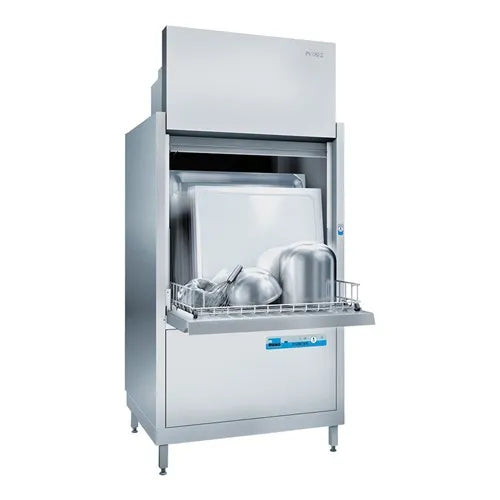
- Pass-Through (Hood-Type) Dishwashers – Best for medium to large kitchens with high turnover, allowing dirty dishes in one side and clean out the other
- Glasswashers – Designed specifically for bars or venues with a high volume of glassware, featuring gentler cycles and quick turnaround
- Conveyor or Rack Dishwashers – Suited for large-scale operations, catering halls, or hospitals handling continuous high volumes
Your venue size, layout, and service style will determine which type fits best. A compact café will have very different needs than a high-volume restaurant or hotel kitchen.
2. Capacity and Speed
Think about how many racks you need to clean per hour. Busy restaurants typically need machines that can handle at least 30–60 racks per hour.
Calculate your peak service dish volume: count covers served per hour, estimate dishes per cover, and factor in prep items and cookware. This gives you a realistic baseline for the capacity you'll need.
3. Water and Energy Efficiency
Look for models with eco modes, heat recovery systems, and low water usage per cycle to save on utilities and boost sustainability. Australian water and energy costs make efficiency features a worthwhile investment.
Modern commercial dishwashers can use as little as 2–3 litres per cycle, compared to older models that might use 10+ litres. Over thousands of cycles annually, these savings add up significantly.
4. Ease of Use and Maintenance
Touchscreen controls, self-cleaning cycles, and easy access for servicing make life easier for your kitchen team. Staff turnover in hospitality is high, so intuitive operation reduces training time.
Consider maintenance requirements and parts availability. Machines that are difficult to service or require specialist technicians can mean costly downtime when issues arise.
5. Hygiene and Compliance
Check for features like thermal disinfection and built-in temperature displays to meet food safety standards. Your dishwasher must reach and maintain proper sanitising temperatures to comply with Australian health regulations.
Features like automatic chemical dosing, rinse aid dispensers, and temperature monitoring ensure consistent results every cycle — critical for food safety audits and customer health.
Best Commercial Dishwasher Brands in Australia
Let's compare the leading brands available through Australian suppliers, examining their standout features and ideal use cases.
🧼 Washtech
Known for: Reliability, energy efficiency, and easy servicing.
Top model: Washtech XP Pass-Through Dishwasher
- Up to 1,000 plates per hour
- Low water consumption (2.4L per cycle)
- Made in New Zealand with strong local support network
- Suited for medium to high-volume kitchens
Best for: Restaurants looking for durability and low running costs with excellent after-sales support.
🧼 Eswood
Known for: Australian-built, cost-effective machines with fast cycles.
Top model: Eswood ES50 Underbench Dishwasher
- Up to 600 plates per hour
- 2-minute wash cycles for quick turnover
- Compact footprint with robust stainless-steel build
- Competitive pricing for local manufacture
Best for: Small to medium restaurants, cafes, and bistros seeking value without compromising quality.
🧼 Meiko
Known for: Premium German engineering, hygiene-focused features, and sustainability.
Top model: Meiko M-iClean H Hood Type Dishwasher
- Heat recovery system for lower energy use
- Active drying system for immediately usable dishes
- Innovative hood opening for ergonomic operation
- Advanced sensors and automation for consistent results
Best for: High-end restaurants and venues prioritising hygiene, speed, and eco-performance where budget allows for premium equipment.
🧼 Sammic
Known for: European-built dishwashers with easy operation and solid performance.
Top model: Sammic X-60B Pass-Through Dishwasher
- 40 racks per hour capacity
- Electronic control panel with multiple programs
- Optional drain pump and water softener for flexibility
- Reliable mid-range performance
Best for: Mid-sized kitchens needing dependable washing with flexibility and straightforward operation.
Commercial Dishwasher Comparison Table
| Brand | Type | Capacity | Best For |
|---|---|---|---|
| Washtech XP | Pass-Through | 1,000 plates/hour | High-volume restaurants |
| Eswood ES50 | Underbench | 600 plates/hour | Cafes & small restaurants |
| Meiko M-iClean H | Hood Type | High volume | Premium establishments |
| Sammic X-60B | Pass-Through | 40 racks/hour | Mid-sized kitchens |
Additional Equipment to Consider
Your dishwashing area needs more than just the machine itself. Proper workflow requires supporting equipment to maximise efficiency.
Consider investing in quality stainless steel work benches for dish sorting and loading areas. You'll also need commercial shelving for clean dish storage and potentially trolleys for transporting racks between dining areas and the dish pit.
Don't forget proper cleaning chemicals formulated for commercial dishwashers — using incorrect detergents can damage machines and void warranties.
Installation and Ongoing Costs
Beyond the purchase price, factor in installation costs including plumbing modifications, electrical upgrades, and ventilation requirements. Pass-through models especially may need significant kitchen layout adjustments.
Ongoing costs include water, energy, detergent, rinse aid, and regular servicing. Ask suppliers about maintenance contracts and parts availability. Some brands offer better local support networks than others, which can be critical for minimising downtime.
Final Thoughts
The best dishwasher for your restaurant depends on your space, dish volume, staff flow, and budget. For compact kitchens, an Eswood underbench is a strong choice. If you're handling large volumes, Washtech and Sammic pass-throughs are reliable workhorses. And for ultimate performance and hygiene, Meiko is hard to beat.
Take time to assess your actual needs rather than over- or under-buying. The right commercial dishwasher becomes the backbone of your kitchen's efficiency, supporting smooth service and maintaining the hygiene standards your customers expect.
Whether you're outfitting a new venue or upgrading existing dishwashing equipment, choosing quality commercial-grade machines designed for Australian conditions will serve you well for years to come.
Ready to upgrade your commercial kitchen? Explore our full range of commercial dishwashing equipment and other essential benchtop equipment to optimise your kitchen workflow.


