

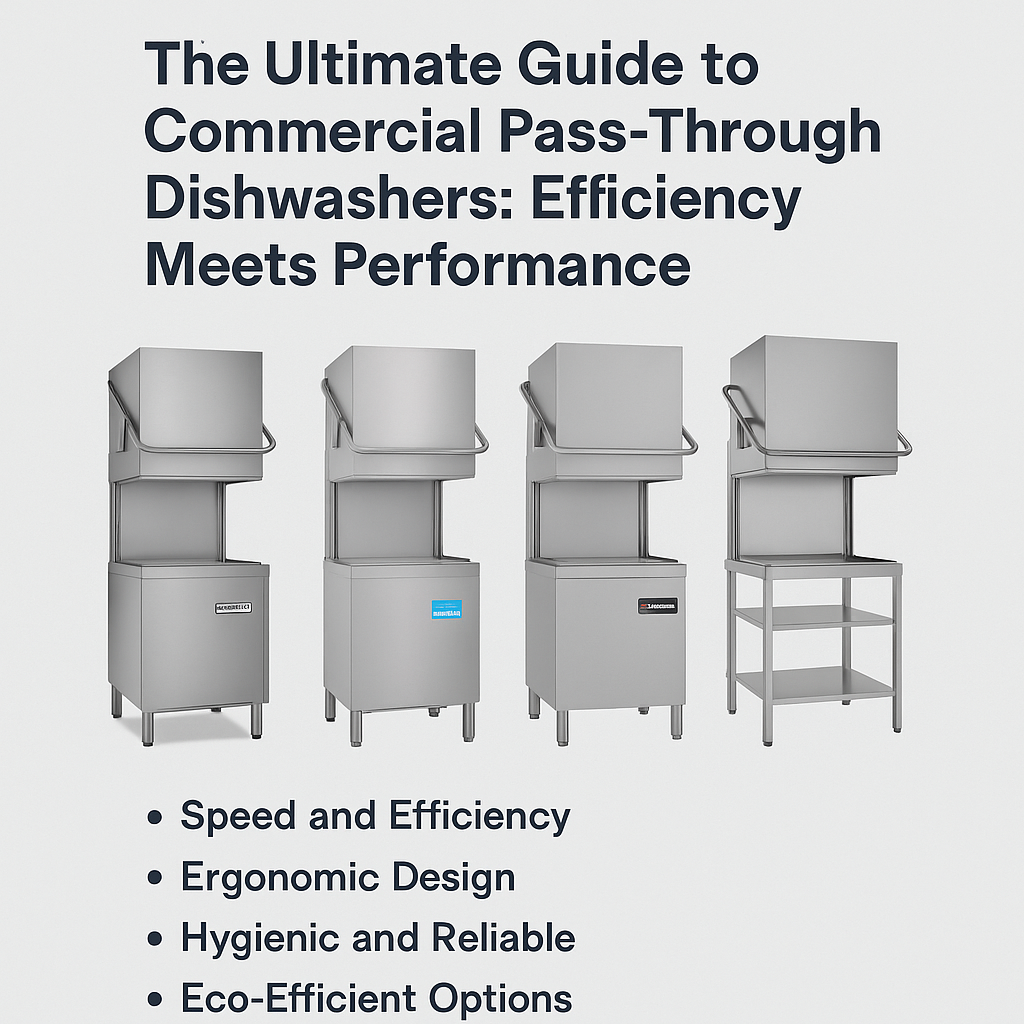
In a busy hospitality environment, efficiency is everything — especially when it comes to cleaning. A commercial pass-through dishwasher can revolutionise the workflow in your kitchen by streamlining the dishwashing process and maintaining the highest hygiene standards. Whether you're running a restaurant, café, hotel, or catering facility, investing in a quality pass-through dishwasher from trusted brands like Hobart, Meiko, Eswood, Washtech, and Sammic can make a major difference in your operations.
This comprehensive guide covers everything you need to know about commercial pass-through dishwashers, from how they work to what you should consider before purchasing one for your venue.
What Is a Commercial Pass-Through Dishwasher?
A pass-through dishwasher (also known as a hood-type or hooded dishwasher) is designed for high-volume kitchens where speed, cleanliness, and ergonomics matter most. Unlike under-bench dishwashers, pass-through models allow trays of dishes to "pass through" from one side to another — creating an efficient workflow from dirty to clean.
These machines are freestanding and built from premium stainless steel, offering durability, reliability, and long-lasting performance in demanding environments. With top models capable of washing over 1,000 plates per hour, they're ideal for restaurants, hotels, and large catering operations.
Popular Brands for Australian Kitchens
When selecting a commercial pass-through dishwasher, Australian hospitality operators typically choose from these leading manufacturers:
- Hobart – Renowned for innovative energy-saving and water-efficient systems
- Meiko – Known for German-engineered precision and hygiene technology
- Eswood – A reliable Australian-made solution perfect for local hospitality venues
- Washtech – Robust and efficient, designed specifically for Australasian kitchens
- Sammic – Offers high performance and user-friendly functionality with ergonomic design
Key Benefits of Pass-Through Dishwashers
Speed and Efficiency
Pass-through dishwashers allow seamless operation — load, wash, and unload in a continuous cycle. Staff can maintain a smooth workflow without bending or pausing, saving time and effort during peak service periods.
Most models complete each wash cycle in just 2–3 minutes, enabling kitchens to process hundreds of plates per hour without bottlenecks.
Ergonomic Design
The raised working height eliminates the need for bending over, reducing fatigue and strain. This is particularly valuable in commercial kitchens where long hours are the norm.
By positioning the dishwasher at a comfortable working height, staff can load and unload racks without the back strain associated with under-bench models.
Hygienic and Reliable
With high-temperature rinse cycles and precise water jets, these machines ensure dishes come out spotless and sanitised — perfect for maintaining food safety compliance.
Final rinse temperatures typically reach 82–85°C, eliminating bacteria and meeting Australian health department standards.
Eco-Efficient Options
Modern brands like Hobart and Meiko integrate smart technology that optimises water, energy, and detergent consumption, reducing your operational costs and environmental footprint.
Energy-efficient models can use as little as 2–3 litres of water per rack, significantly lower than older dishwasher technology.
Key Takeaways
- Pass-through dishwashers can process over 1,000 plates per hour in high-volume kitchens
- Ergonomic design reduces staff fatigue and improves workplace safety
- High-temperature sanitising cycles ensure food safety compliance
- Modern models offer significant water and energy savings compared to older technology
- Brands like Hobart, Meiko, Eswood, Washtech, and Sammic dominate the Australian market
Essential Considerations Before Buying
Before investing in a commercial pass-through dishwasher, make sure your site meets all installation and performance requirements. Proper planning ensures smooth installation and optimal operation from day one.
Site Requirements Checklist
Key considerations include:
- Water supply and pressure – Most models require minimum 200 kPa pressure
- Drainage and sewage setup – Adequate drainage capacity for high water flow
- Electrical requirements – Single or three-phase power depending on model
- Hot vs cold water supply – Some models include internal booster heaters
- Water softener type and maintenance – Essential for preventing scale build-up
Understanding these factors ensures your dishwasher operates at peak efficiency and prevents costly installation issues. Professional site assessment is recommended before purchasing.
Size, Capacity and Configuration
When choosing your pass-through dishwasher, measure your available space carefully. You'll need room for the complete dishwashing system, not just the machine itself.
Space Planning Essentials
A complete pass-through system requires space for:
- Pre-rinse and loading tables
- The machine itself (including hood clearance)
- Unloading and drying zones
Pass-through systems can handle 18–20 plates per rack, completing each cycle in just 2–3 minutes. Models like the Hobart Ecomax H602 or Sammic PRO Series offer auto-start hoods and energy-saving rinse cycles, maximising efficiency while maintaining hygiene.
Most pass-through dishwashers measure between 600–800mm wide, 700–850mm deep, and 1400–2000mm high. Always verify exact dimensions and clearance requirements with your supplier.
| Capacity Range | Plates Per Hour | Best Suited For |
|---|---|---|
| Entry Level | 500–700 | Small restaurants, cafés |
| Mid Range | 700–1000 | Medium restaurants, clubs |
| High Volume | 1000–1500+ | Hotels, large catering facilities |
Power Requirements
Pass-through dishwashers generally require more power than under-bench models. Most are supplied in three-phase power for maximum performance, though some can operate on single-phase setups.
Three-phase models typically range from 12–18 kW, while single-phase versions use 7–10 kW. Always ensure your power circuit can support the chosen model and that a licensed electrician assesses your electrical infrastructure before installation.
If your venue doesn't have three-phase power available, upgrading your electrical service may be necessary — factor this cost into your overall budget.
Pros and Cons of Pass-Through Dishwashers
Advantages
- Exceptional speed and water efficiency for high-volume operations
- Hygienic high-temperature sanitisation meets health standards
- Ergonomic operation reduces staff fatigue and injury risk
- Eco-friendly options available with low water and energy usage
- Designed for heavy-duty, continuous operation in demanding environments
- Clear separation between dirty and clean zones improves hygiene
Disadvantages
- Requires dedicated kitchen space and proper ventilation
- Higher upfront investment than smaller under-bench units
- Regular maintenance needed to ensure optimal performance
- Professional installation typically required
- May require electrical service upgrades for three-phase power
Setting Up Your Complete Dishwashing Station
A pass-through dishwasher performs best as part of a complete dishwashing station. To optimise efficiency and hygiene, your warewashing area should include several key components beyond the dishwasher itself.
Essential Components
- Pre-rinse sink and spray system for removing food debris before washing
- Loading tables for stacking dirty dishes and organising racks
- Draining racks or drying tables for clean dishes to air-dry properly
- Storage shelving for clean dish racks and cleaning chemicals
Brands like Hobart, Meiko, and Washtech offer integrated systems with matching accessories to create a seamless cleaning line. Investing in quality stainless steel work benches and commercial shelving ensures your dishwashing station operates efficiently for years.
Workflow Optimisation
The ideal dishwashing workflow moves in one direction only: dirty dishes enter from the kitchen side, progress through pre-rinse and washing, then exit clean on the opposite side. This single-direction flow minimises cross-contamination and maximises staff efficiency.
Position your pre-rinse station, dishwasher, and drying area in a straight line where possible, with adequate space for staff to work comfortably at each station.
Maintenance and Operational Tips
Regular maintenance is essential for keeping your commercial pass-through dishwasher operating at peak performance. Most manufacturers recommend daily, weekly, and monthly maintenance schedules.
Daily Maintenance Tasks
- Clean wash and rinse arms to prevent blockages
- Empty and clean the drain filter
- Wipe down exterior surfaces and door seals
- Check detergent and rinse aid levels
Weekly and Monthly Tasks
- Deep clean the wash chamber and spray arms
- Inspect door seals for wear or damage
- Check water temperature and pressure
- Test water softener and regenerate if needed
- Schedule professional servicing as per manufacturer guidelines
Proper maintenance extends equipment life, reduces repair costs, and ensures consistent wash quality that meets health department standards.
| Maintenance Task | Frequency | Impact If Neglected |
|---|---|---|
| Clean drain filter | Daily | Poor wash quality, drainage issues |
| Descale wash chamber | Weekly | Scale build-up, reduced efficiency |
| Service water softener | Monthly | Hard water damage, spotting |
| Professional service | 6–12 months | Breakdowns, shortened lifespan |
Choosing the Right Model for Your Venue
Selecting the right commercial pass-through dishwasher depends on several factors specific to your operation. Consider your daily dish volume, available space, budget, and future growth plans.
Volume Assessment
Calculate your peak-hour dish volume to determine the capacity you need. A busy restaurant serving 200 covers per service might generate 600–800 plates, plus glassware, cutlery, and cookware.
Choose a model that can handle your peak volume with some capacity to spare — this prevents bottlenecks during rush periods and allows for business growth.
Budget Considerations
While premium brands like Hobart and Meiko command higher prices, they typically offer superior energy efficiency, longer lifespans, and lower operating costs. Calculate total cost of ownership over 7–10 years rather than focusing solely on purchase price.
Factor in installation costs, ongoing maintenance, water and energy consumption, and potential downtime when comparing models.
Key Takeaways
- Choose capacity based on peak-hour volume, not average daily usage
- Three-phase models offer better performance but require appropriate electrical infrastructure
- Complete dishwashing stations include pre-rinse, washing, and drying zones
- Regular maintenance is essential for longevity and consistent performance
- Calculate total cost of ownership over 7–10 years, not just purchase price
- Professional installation and site assessment prevent costly issues
Why Choose Hospitality Connect
At Hospitality Connect, we help Australian hospitality businesses find the right dishwashing solution for their needs. Our experts can recommend high-performance options from Hobart, Meiko, Eswood, Washtech, and Sammic, ensuring you get a dishwasher that delivers efficiency, durability, and outstanding results.
We understand the unique challenges facing Australian venues — from water quality issues to space constraints and energy costs. Our team provides honest advice based on decades of industry experience, not just sales targets.
Whether you're upgrading your kitchen or fitting out a new venue, we'll help you choose the perfect commercial pass-through dishwasher to keep your operations running smoothly — and your dishes spotless.
Ready to Upgrade Your Dishwashing System?
Boost productivity, hygiene, and energy efficiency with a commercial pass-through dishwasher that's built for your business. A quality dishwasher is an investment that pays dividends through faster service, lower labour costs, and improved hygiene standards.
Explore our full range of commercial dishwashing equipment today and discover why Australia's hospitality professionals trust Hospitality Connect for quality equipment and expert advice. Our team is ready to help you design the perfect dishwashing solution for your venue, whether you're running a café, hotel, or large catering operation.
Contact us today for personalised recommendations, site assessments, and competitive pricing on Australia's leading commercial pass-through dishwashers.


