

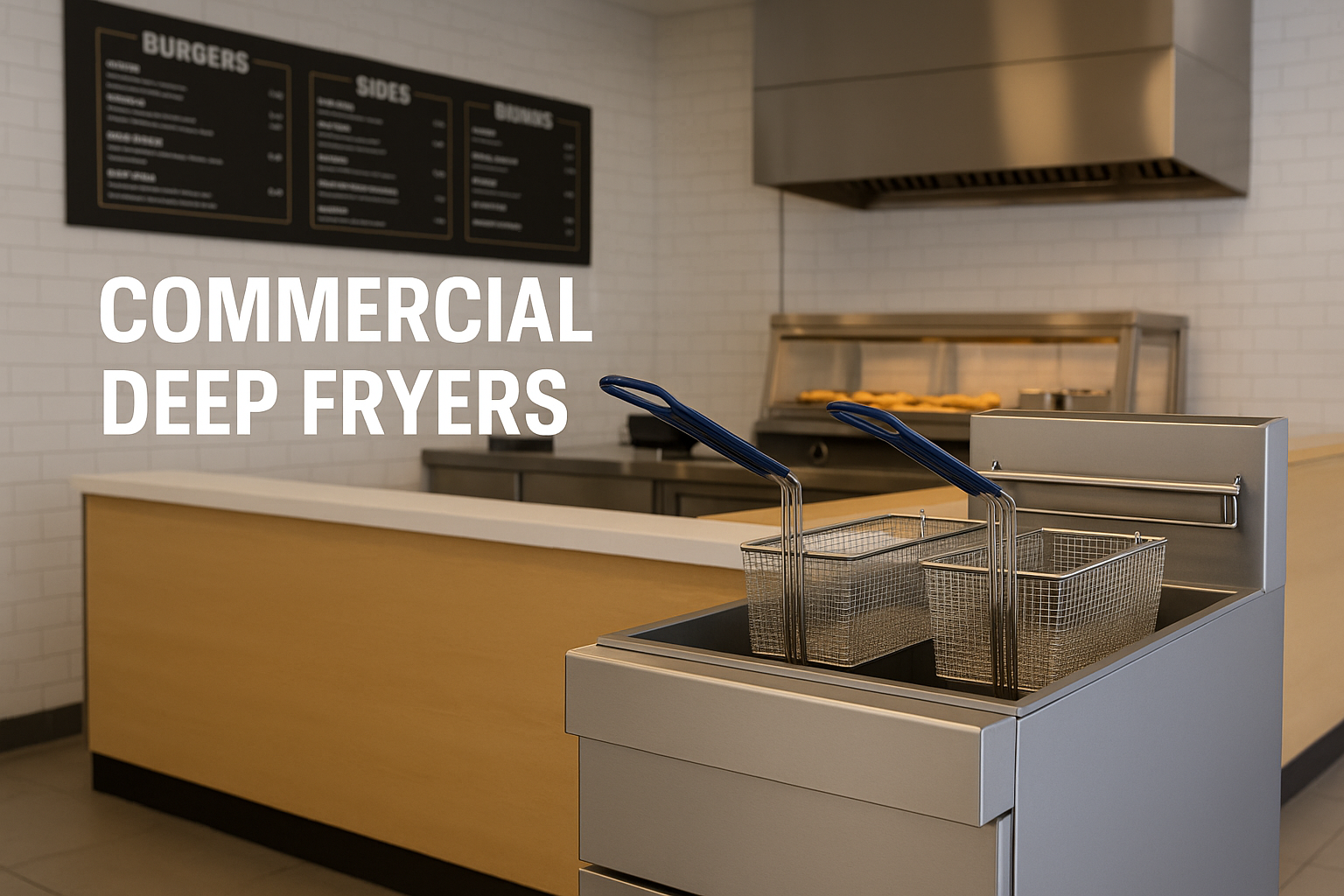
If you're in the market for a commercial deep fryer, finding the right model for your restaurant or café can make a huge difference in your kitchen's performance and profitability. From Anets, Frymaster, Pitco, and Henny Penny, to many other trusted brands, Hospitality Connect helps you choose the perfect fryer that suits your cooking style, output, and budget — while saving on energy and maintenance costs.
In this guide, we'll explain the different types of commercial deep fryers, compare gas vs electric models, and share key buying considerations to help you make the best decision for your business.
Key Takeaways
- Countertop fryers suit small kitchens and specialty items, while floor models handle high-volume operations
- Gas fryers offer faster heat-up and temperature recovery; electric fryers provide precise control and portability
- Match your fryer capacity to your menu volume: 1.5–2x oil capacity equals hourly food output
- Regular maintenance and oil filtration extend equipment lifespan and reduce operating costs
- Choose brands like Anets, Frymaster, Pitco, and Henny Penny for proven reliability in Australian commercial kitchens
What Are Commercial Deep Fryers?
Commercial deep fryers are high-performance kitchen appliances built for heavy-duty frying in restaurants, cafés, and catering operations. They allow you to fry foods like chips, chicken, seafood, and snacks quickly and consistently.
Brands such as Anets, Frymaster, Pitco, and Henny Penny are renowned for their durability, energy efficiency, and reliability — making them the go-to choices for commercial kitchens across Australia.
Whether you're running a busy takeaway, a café serving fried breakfast items, or a full-service restaurant, investing in quality commercial cooking equipment ensures consistent food quality and operational efficiency.
Types of Commercial Deep Fryers
There are two main categories of commercial deep fryers, each designed for different kitchen environments and output requirements.
1. Countertop Fryers
Compact and efficient, countertop fryers are perfect for small kitchens or venues with limited space. Ideal for lower-volume frying or specialty menu items, they are easy to install and maintain.
These units work well in cafés, food trucks, and smaller takeaway venues where bench space is at a premium. Many models are electric-powered, making them ideal for kitchens without gas connections.
2. Floor Model Fryers
For higher demand operations, floor-standing fryers like those from Frymaster and Pitco offer larger oil capacities, faster recovery times, and higher output. These are the preferred choice for restaurants and fast-food venues frying large volumes of chips, chicken, or fish.
Floor models often feature multiple vats, allowing you to fry different products simultaneously without flavour transfer. They're built for durability and designed to handle continuous use during peak service periods.
Gas vs Electric Commercial Deep Fryers
Choosing between gas and electric depends on your kitchen's workflow, menu, and available energy source. Both have distinct advantages depending on your operation.
| Feature | Gas Fryers | Electric Fryers |
|---|---|---|
| Heat-up Time | Faster | Moderate |
| Temperature Recovery | Excellent for high volume | Precise control |
| Installation | Requires gas connection | Plug-and-play convenience |
| Best For | High-volume restaurants | Cafés, food trucks, small venues |
Gas Fryers
Gas fryers heat up faster and handle high-volume cooking with ease. Brands like Pitco and Frymaster gas models deliver excellent temperature recovery, ensuring consistent results during peak periods.
They're ideal for busy restaurants, fish and chip shops, and fast-food operations where speed and output are critical. Gas models typically have lower running costs in areas where natural gas is readily available.
Electric Fryers
Electric fryers are compact, precise, and efficient for smaller batches. Anets and Henny Penny electric fryers are ideal for cafés, food trucks, or kitchens where space and plug-and-play convenience are priorities.
They offer more precise temperature control, making them suitable for delicate items or kitchens where consistency is more important than raw throughput. Electric models also eliminate the need for gas line installation and compliance.
At Hospitality Connect, we can help you compare running costs, heat-up time, and maintenance needs to determine the most cost-effective fryer setup for your operation.
Which Fryer Is Best for Your Menu?
Different kitchens require different fryer capacities and configurations. Your menu type should guide your equipment selection to maximise efficiency and food quality.
For Chicken and Large Proteins
Choose a Henny Penny pressure fryer or Pitco floor model for even cooking and oil longevity. Pressure fryers cook chicken faster while retaining moisture and reducing oil absorption, resulting in juicier products and longer oil life.
For Chips and Seafood
Opt for Frymaster gas fryers with multiple vats for fast, high-volume output. Separate vats prevent flavour transfer between seafood and other fried items, maintaining product integrity across your menu.
For Snacks or Small Items
Anets countertop fryers are compact, quick to heat, and easy to clean. They're perfect for cafés serving fried appetisers, doughnuts, or specialty items that don't require continuous high-volume frying.
Our team at Hospitality Connect helps tailor fryer recommendations to your menu type, space, and service volume — ensuring you only pay for the performance you need. Browse our full range of commercial deep fryers to find the right match.
How to Choose the Right Fryer Size
Capacity matters. Overloading your fryer leads to inconsistent cooking, while an oversized model wastes energy and oil.
As a general rule, a fryer can cook 1.5–2x its oil capacity in food per hour. So, an 18kg fryer can produce around 27–36kg of food per hour.
Consider your busiest service periods and calculate the volume of fried food you need to produce. If you're serving 100 portions of chips during a two-hour lunch rush, you'll need sufficient capacity to maintain quality without bottlenecking your kitchen flow.
At Hospitality Connect, we'll help you calculate your ideal fryer size and output to match your kitchen's daily demand, ensuring efficiency and savings.
| Oil Capacity | Estimated Hourly Output | Best For |
|---|---|---|
| 8–12L | 12–24kg/hour | Cafés, small takeaways |
| 15–18L | 22–36kg/hour | Medium restaurants |
| 20–30L+ | 30–60kg/hour | High-volume operations, fast food |
Cleaning and Maintenance
Proper maintenance extends your fryer's lifespan and keeps food quality consistent. Regular care also reduces oil costs and prevents expensive breakdowns.
Daily Maintenance Tasks
Choose models with front-mounted drain valves for safer oil disposal. Clean baskets regularly and filter oil daily to prevent residue buildup and extend oil life.
Wipe down exterior surfaces and control panels to prevent grease accumulation. Check oil quality by observing colour, smell, and the presence of carbon buildup or foam.
Professional Service and Parts
Schedule periodic maintenance checks — Hospitality Connect provides service plans and spare parts for all leading fryer brands including Frymaster, Anets, Pitco, and Henny Penny.
By keeping your fryer clean and well-maintained, you'll save on oil costs and avoid costly breakdowns. Regular servicing also ensures compliance with food safety standards and warranty requirements.
Top Tips for Buying a Commercial Deep Fryer
When shopping for a fryer, consider these essential factors to ensure you're making the right investment for your kitchen:
- Menu type – What foods will you fry most often? Different products have different temperature and capacity requirements.
- Output – How much volume will you produce during peak hours? Underestimating capacity leads to service delays and frustrated customers.
- Space – Do you need a compact countertop unit or a full-size floor fryer? Measure your available kitchen space before committing.
- Energy source – Is your kitchen better suited for gas or electric? Consider installation costs and ongoing utility expenses.
- Ease of cleaning – Look for models with simple draining and filtration systems to reduce labour time and improve hygiene.
Take advantage of expert advice when selecting equipment. The right fryer specification can save thousands in energy costs and labour hours over the equipment's lifetime.
Explore our complete range of commercial cooking equipment to outfit your entire kitchen with reliable, efficient appliances.
Why Buy From Hospitality Connect
Hospitality Connect is Australia's trusted supplier of commercial kitchen equipment, offering premium fryer brands like:
- Anets – Dependable, compact, and ideal for cafés and smaller kitchens
- Frymaster – Industry-leading energy efficiency and high-volume performance
- Pitco – Renowned for durability, fast recovery times, and low oil consumption
- Henny Penny – Experts in pressure fryers and advanced oil filtration technology
We provide expert advice, warranty support, and competitive pricing — helping you save thousands in long-term operating costs. Our team understands Australian commercial kitchen requirements and can recommend equipment that meets local standards and regulations.
Whether you're setting up a new venue or upgrading existing equipment, we'll guide you through specification, installation, and ongoing support. Check out equipment options for specific venue types including café equipment, burger shop equipment, and food truck equipment.
Conclusion: Choose Smart, Fry Smarter
A commercial deep fryer is an essential investment for any serious foodservice business. Whether you're upgrading your café, takeaway shop, or full-service restaurant, the right fryer will enhance food quality, reduce labour, and save energy.
Partner with Hospitality Connect to find the best Anets, Frymaster, Pitco, or Henny Penny fryer for your needs — and experience the difference that smart kitchen design and reliable equipment can make.
👉 Visit hospitalityconnect.com.au to speak with our equipment specialists and discover how you can save time, energy, and money with the perfect fryer solution for your Australian commercial kitchen.


