

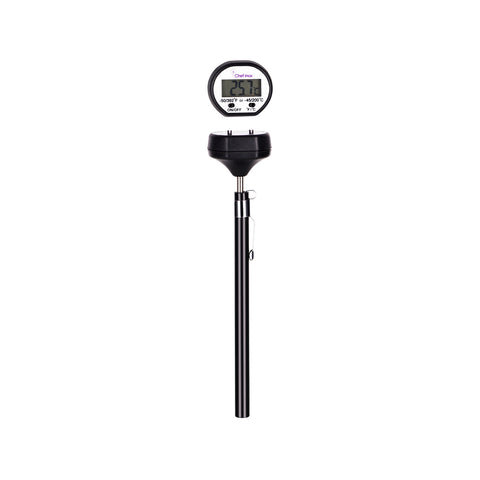
In any commercial kitchen, accuracy in temperature control is non-negotiable. Whether you're checking food safety compliance, ensuring perfect cooking results, or monitoring equipment performance, using the right thermometer for each application is essential to your operation's success.
From commercial fridges and commercial ovens to coffee machines and deep fryers, this comprehensive guide will help you select the correct thermometer for every task. We'll cover trusted brands like HLP and Chef Inox, both widely used across Australian hospitality venues.
Key Takeaways
- Different kitchen applications require specific thermometer types and temperature ranges
- Digital thermometers offer precision and alarm features, while analog models need no batteries
- Food safety compliance depends on accurate temperature monitoring at every stage
- Investing in quality thermometers protects food quality, customer safety, and your reputation
Fridge and Freezer Thermometers
Purpose: To monitor and maintain safe cold storage temperatures that comply with Australian food safety standards.
Ideal Temperature Range:
- Fridges: 1°C to 4°C
- Freezers: -18°C or lower
Recommended Types:
- Dial thermometers: Easy to read at a glance, require no batteries, and are cost-effective for multiple units
- Digital thermometers: Offer superior precision and often include programmable alarm features to alert staff when temperatures drift outside safe zones
Brands to Consider:
- HLP offers reliable digital fridge/freezer thermometers with programmable alarms that help prevent spoilage
- Chef Inox provides compact, stainless-steel dial options suitable for walk-in units or underbench refrigeration
Oven Thermometers
Purpose: To verify the actual internal temperature of an oven, which can vary significantly from the dial setting—especially in older or heavily-used equipment.
Ideal Temperature Range: Up to 300°C or higher
Recommended Types:
- Oven-safe dial thermometers that sit or hang inside the oven cavity
- Digital probe thermometers with heat-resistant cords for real-time monitoring without opening the oven door
Brands to Consider:
- Chef Inox oven thermometers are durable, heat-resistant, and easy to calibrate for consistent results
- HLP digital probes with timers and alarms are ideal for precision baking and roasting applications
Coffee Thermometers
Purpose: To ensure water and milk reach optimal temperatures for espresso extraction and milk texturing—critical for cafés and café equipment setups.
Ideal Temperature Range:
- Espresso brewing: 90–96°C
- Milk frothing: 60–70°C
Recommended Types:
- Dial thermometers with clips designed to attach securely to milk jugs
- Digital instant-read thermometers for quick water temperature verification
Brands to Consider:
- Chef Inox milk thermometers feature jug clips and easy-to-read dials for busy barista stations
- HLP offers fast-response digital options for barista-level temperature control
Food (Core Temperature) Thermometers
Purpose: To check internal temperatures of meats, poultry, and prepared foods, ensuring compliance with food safety regulations and preventing foodborne illness.
Food Safety Temperature Guidelines:
| Food Type | Minimum Safe Temperature |
|---|---|
| Chicken and poultry | 75°C |
| Beef (medium) | 60–65°C |
| Reheated foods | 74°C |
| Ground meats | 71°C |
| Fish and seafood | 63°C |
Recommended Types:
- Instant-read digital thermometers for speed and accuracy during service
- Probe thermometers with programmable alarms for cooking and hot-holding applications
Brands to Consider:
- HLP's waterproof, NSF-rated models are built for high-traffic kitchens and easy sanitising
- Chef Inox offers both analog and digital models that are simple, rugged, and food-safe
Deep Fry Thermometers
Purpose: To monitor oil temperature for frying, preventing burning, undercooking, and excessive oil absorption that affects food quality and profitability.
Ideal Temperature Range: 160–190°C
Recommended Types:
- Clip-on analog thermometers that attach securely to fryer baskets or pots
- Digital deep fry thermometers with high-heat probes designed for oil immersion
Brands to Consider:
- Chef Inox offers traditional candy/fry thermometers with clear temperature markings
- HLP makes digital models with oil-safe probes and programmable temperature alerts
Water Thermometers
Purpose: For specialised tasks including dough proofing, tea brewing, chocolate tempering, and hot water sanitation verification.
Ideal Temperature Range: Varies by application (typically 30–100°C)
Recommended Types:
- Digital waterproof thermometers for precision work
- Floating or immersion thermometers for tanks, sinks, and large containers
Brands to Consider:
- HLP's waterproof digital thermometers deliver laboratory-grade precision for exacting work
- Chef Inox's floating thermometers are ideal for large containers or brewing applications
Infrared (IR) Thermometers
Purpose: To measure surface temperatures without physical contact—ideal for grill tops, flat cooking surfaces, pizza ovens, or receiving temperature checks on deliveries.
Ideal Applications: When speed, hygiene, or distance measurement is important
Recommended Features:
- Laser targeting for pinpoint accuracy
- Dual-laser or adjustable emissivity settings for professional-grade measurement
Brands to Consider:
- HLP infrared models feature fast scanning and dual laser targeting for consistent readings
- Chef Inox carries handheld IR guns suitable for both front- and back-of-house applications
Choosing the Right Thermometer for Your Operation
| Application | Best Thermometer Type | Key Feature |
|---|---|---|
| Cold storage monitoring | Digital with alarm | 24/7 monitoring |
| Food safety checks | Instant-read probe | Fast, accurate core temp |
| Coffee preparation | Dial with jug clip | Hands-free monitoring |
| Oven calibration | Oven-safe dial | Heat resistant to 300°C+ |
| Surface temperature | Infrared gun | Non-contact hygiene |
| Deep frying | Clip-on analog or digital | Oil-safe probe |
Final Thoughts
Selecting the correct thermometer depends on your specific task, required temperature range, and desired level of accuracy. Investing in the right temperature monitoring tools—whether for refrigeration, checking food doneness, or perfecting coffee—helps ensure safety, consistency, and quality across your entire operation.
Brands like HLP and Chef Inox are trusted throughout Australia and internationally for their reliability, affordability, and durability in demanding commercial environments. Quality thermometers aren't an expense—they're insurance against food waste, compliance issues, and reputation damage.
Ready to upgrade your temperature monitoring equipment? Browse our complete range of thermometers and timers designed specifically for Australian commercial kitchens, or explore our full selection of cooking equipment to build a kitchen that performs consistently every service.


