

When setting up a commercial kitchen, choosing between an open mouth toaster and a salamander grill can be confusing. While both appliances are used for toasting and grilling, they serve distinctly different purposes and are designed for different cooking applications.
Understanding these differences will help you select the right equipment for your kitchen workflow and avoid costly purchasing mistakes.
What Is an Open Mouth Toaster?
An open mouth toaster is a high-speed commercial toaster featuring an open front design that allows operators to quickly insert and remove bread, bagels, buns, or toasted sandwiches. It's engineered for rapid, repetitive toasting in high-volume environments like cafes, fast food outlets, and buffet lines.
These units are built for efficiency and speed, making them ideal for breakfast service and operations where toast production is a primary requirement.
Key Features of Open Mouth Toasters
- Fast heat-up time for quick service
- Ideal for bread, sandwiches, and bagels
- Compact countertop design that saves space
- Conveyor or vertical toasting mechanisms
- Typically electric-powered for consistent results
Best Use Cases for Open Mouth Toasters
- Cafes, bakeries, and breakfast bars with high toast volume
- Fast food outlets serving burgers and sandwiches
- Front-of-house self-service setups in hotels and buffets
- Food trucks and mobile catering with limited space
What Is a Salamander Grill?
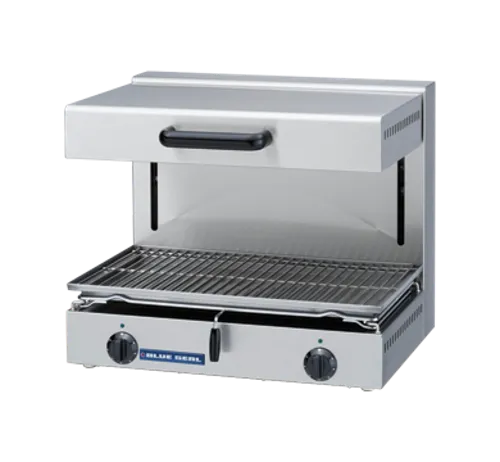
A salamander grill is a high-heat overhead broiler used for finishing, grilling, browning, and melting. It delivers intense, direct heat from above and is typically mounted above a cookline or placed on a bench as part of your commercial cooking equipment setup.
Unlike simple toasters, salamander grills offer precise temperature control and versatility, making them essential for professional kitchens that require restaurant-quality finishing.
Key Features of Salamander Grills
- Adjustable grill rack height for precise cooking
- Precise temperature control for different applications
- Quick browning, melting, and gratin finishing
- Gas or electric options to suit your kitchen setup
- Can toast, grill, and reheat multiple dish types
Best Use Cases for Salamander Grills
- Restaurants, bistros, and fine dining establishments
- Melting cheese on French onion soup or nachos
- Crisping skin on poultry or fish dishes
- Grilling steaks and meats to order
- Finishing plated meals with professional presentation
- Reheating dishes without drying them out
- You primarily toast bread, buns, or sandwiches throughout service
- Speed and simplicity are your top priorities
- You operate a cafe or coffee shop with high breakfast volume
- You have limited space or need front-of-house equipment
- Your menu focuses on toasted sandwiches, bagels, and bread products
- You need consistent, repeatable results with minimal training
- You need to grill, brown, melt, or finish a variety of dishes
- Your kitchen requires precise heat control for different applications
- You're aiming for restaurant-quality presentation on plated meals
- You serve dishes that require melted cheese, caramelised tops, or grill marks
- You operate a full-service restaurant or bistro
- You need versatile equipment that can handle multiple cooking tasks
- Open mouth toasters are specialised for high-speed, high-volume bread toasting in cafes and breakfast service
- Salamander grills are versatile finishing tools for browning, grilling, and melting in full-service kitchens
- Choose based on your primary menu items and service style, not just because both appliances can toast
- Many professional kitchens use both appliances to cover different cooking needs
- Consider your available space, power requirements, and budget when making your decision
Open Mouth Toaster vs Salamander Grill: Side-by-Side Comparison
To help you understand the practical differences between these two appliances, here's a detailed comparison of their features and capabilities.
| Feature | Open Mouth Toaster | Salamander Grill |
|---|---|---|
| Primary Purpose | High-volume bread toasting | Finishing, browning, grilling |
| Heat Source | Front-facing or conveyor | Overhead from above |
| Temperature Control | Basic, preset options | Precise, adjustable |
| Versatility | Limited to bread products | Meats, vegetables, cheese, gratins |
| Speed | Very fast (30-60 seconds) | Variable (1-10 minutes) |
| Typical Placement | Countertop, front-of-house | Wall-mounted above cookline |
| Power Source | Usually electric | Gas or electric |
| Best For | Cafes, breakfast service | Restaurants, plated service |
Which One Should You Choose?
The decision between an open mouth toaster and a salamander grill depends entirely on your kitchen's primary needs, menu offerings, and service style.
Choose an Open Mouth Toaster If:
Choose a Salamander Grill If:
Key Takeaways
Can You Use Both in the Same Kitchen?
Many commercial kitchens benefit from having both an open mouth toaster and a salamander grill. This combination covers both high-volume toast production and versatile finishing capabilities.
For example, a busy cafe might use an open mouth toaster for breakfast service while adding a small salamander or open toaster for melting cheese on lunch items. Full-service restaurants often have both to handle different menu requirements efficiently.
Space and Budget Considerations
If you're working with limited space or budget, prioritise the appliance that aligns with your most frequent cooking tasks. A bakery or breakfast-focused venue will get more value from an open mouth toaster, while a restaurant serving diverse plated meals will rely heavily on a salamander grill.
Consider your benchtop equipment layout and whether you have the overhead space for a wall-mounted salamander or need the countertop flexibility of an open mouth toaster.
Maintenance and Operational Differences
Beyond their cooking functions, these appliances have different maintenance requirements that affect long-term operational costs.
Open Mouth Toaster Maintenance
Open mouth toasters require regular cleaning of crumb trays and heating elements. They're relatively simple appliances with fewer moving parts, making them easier to maintain and repair. Daily cleaning takes just a few minutes.
Salamander Grill Maintenance
Salamander grills need more thorough cleaning due to grease and food splatter from various dishes. Gas models require periodic inspection of burners and gas lines. The adjustable racks and more complex heating systems need regular attention to maintain performance.
Final Thoughts
While both appliances generate heat and can handle toasting, their purposes are fundamentally different. An open mouth toaster is built for speed and volume, making it ideal for breakfast service and high-turnover operations. A salamander grill brings finesse and culinary versatility to your cooking line, enabling professional finishing techniques.
The right choice depends on your menu, service style, and operational priorities. Don't choose based on what the equipment can theoretically do—choose based on what you'll actually use it for every day.
Need Help Choosing the Right Equipment?
At Hospitality Connect, we offer a comprehensive range of commercial toasters and salamander grills from trusted brands including Woodson, Goldstein, Blue Seal, and Benchstar.
Our team understands Australian commercial kitchens and can help you select the right equipment for your specific operational needs. Whether you're setting up a new cafe, upgrading your hotel kitchen equipment, or outfitting a full-service restaurant, we'll ensure you get the right appliance for your workflow.
Contact us today to discuss your commercial kitchen requirements and find the perfect toasting or grilling solution for your business.


