

The Secret Behind Perfect Pasta Shapes
If you've ever wondered how pasta goes from a blob of dough to beautiful shapes like spaghetti, fusilli, or penne—the answer lies in one simple but powerful tool: the pasta maker die.
In professional kitchens and Italian restaurants, using a commercial pasta machine like the Sirman Pasta Maker means you can create a wide variety of pasta shapes by simply switching the die. This guide explains what a pasta maker die is, the different types available, and how they impact your menu, with a focus on commercial-grade pasta extrusion equipment.
Key Takeaways
- Pasta dies are removable inserts that shape dough as it's extruded through the machine
- Bronze dies create rustic, sauce-gripping texture; Teflon dies produce smooth, glossy pasta
- Different die shapes suit different sauces, cooking methods, and menu applications
- Commercial pasta makers like Sirman use interchangeable dies for maximum versatility
What Is a Die for a Pasta Maker?
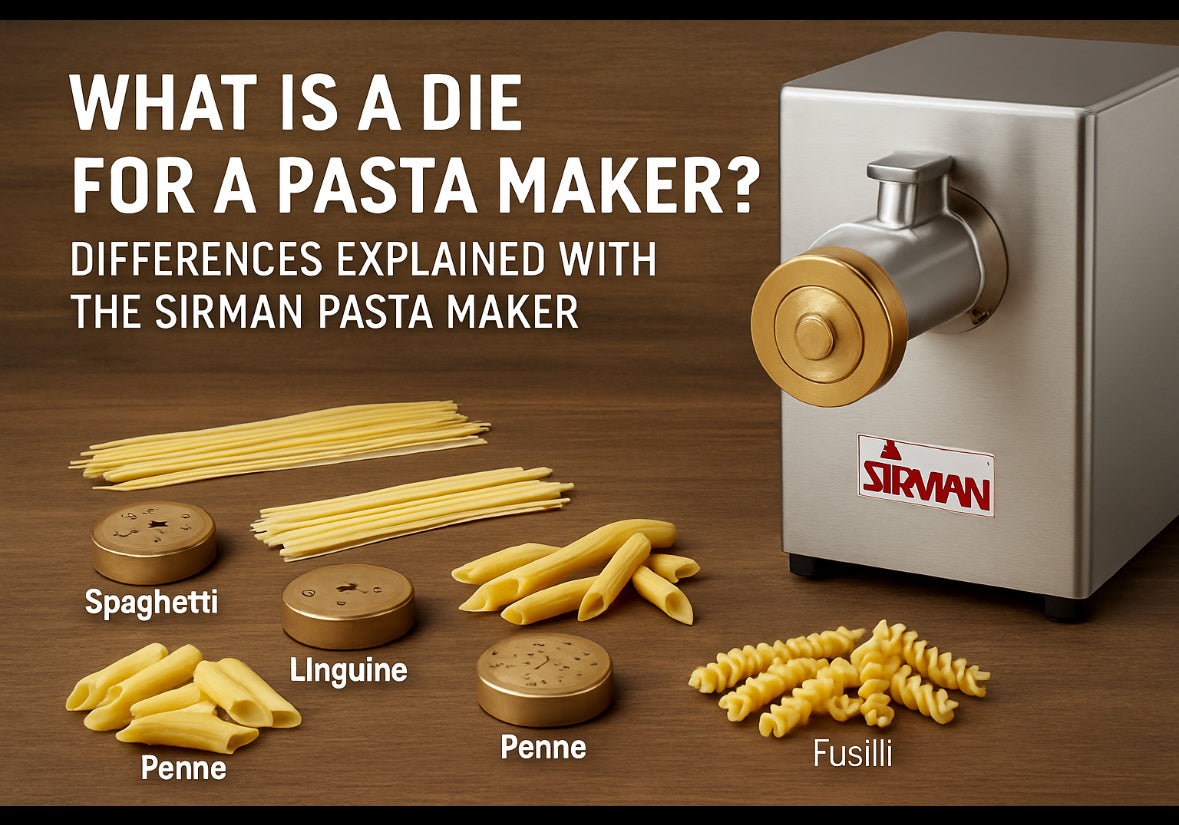
A pasta die is a removable disc or insert that shapes pasta dough as it's pushed (extruded) through the machine. Think of it as a pasta mould—the die determines the shape, size, thickness, and even texture of your finished product.
The Sirman Pasta Maker uses interchangeable dies that allow chefs to produce everything from spaghetti to rigatoni with speed and consistency. This flexibility is essential for commercial kitchens looking to expand their food preparation capabilities without purchasing multiple machines.
Die Materials: Bronze vs Teflon-Coated
Understanding the difference between die materials is crucial for achieving your desired pasta finish and customer experience.
Sirman dies come in two main types:
- Bronze dies create a rustic, rough texture that clings beautifully to sauces. The porous surface creates micro-abrasions that help sauce adhere to every strand or piece.
- Teflon-coated dies produce glossy, smooth pasta that's perfect for fast plating and modern presentation. These dies also allow for faster extrusion and easier cleaning.
| Die Material | Texture | Best For | Kitchen Advantage |
|---|---|---|---|
| Bronze | Rough, porous | Traditional Italian dishes | Superior sauce retention |
| Teflon-Coated | Smooth, glossy | High-volume service | Faster production, easier cleaning |
Types of Pasta Dies for Commercial Kitchens
Let's explore the most common pasta dies available with the Sirman Pasta Machine and how they can elevate your kitchen operations. Understanding which die suits which application helps you plan menus and streamline service.
1. Spaghetti Die
- Shape: Long, round strands (1.5–2 mm diameter)
- Best For: Tomato-based sauces, seafood, or olive oil-based dishes
- Pro Tip: Use bronze dies for a more rustic finish and better sauce grip
Spaghetti remains the most requested pasta shape in Australian restaurants, making this die essential for any Italian or Mediterranean venue.
2. Spaghettini Die
- Shape: Thinner version of spaghetti (around 1.3 mm)
- Best For: Light sauces and quick cooking applications
- Application: Ideal for fast lunch service or fine dining presentations
3. Linguine Die
- Shape: Long, flat, narrow ribbons (4 mm wide)
- Best For: Pesto, clam sauces, and creamy dishes
- Finish Options: Available in smooth (Teflon) or rustic (bronze)
4. Bucatini Die
- Shape: Thick spaghetti with a hollow centre
- Function: Holds extra sauce inside the tube
- Recommended Use: Thick sauces like Amatriciana or carbonara
The hollow centre makes bucatini unique—sauce fills the tube, delivering flavour with every bite.
5. Tagliatelle Die
- Shape: Long, wide flat ribbons (6–8 mm)
- Best For: Bolognese, mushroom sauces, creamy dishes
- Ideal For: Rustic, hearty Italian preparations
6. Penne Die
- Shape: Short diagonal-cut tubes
- Options: Smooth or ridged (Penne Rigate)
- Best For: Oven-baked pasta and thick, chunky sauces
Penne rigate (ridged) is particularly popular in cafés and casual dining venues. The ridges create extra surface area for sauce while maintaining structural integrity during baking.
7. Fusilli Die
- Shape: Spiral or corkscrew-shaped pasta
- Function: Catches chunky or creamy sauces in its grooves
- Perfect For: Pasta salads, creamy sauces, or casseroles
8. Macaroni Die
- Shape: Small curved tubes
- Use: Great for mac and cheese, soups, or baked dishes
Essential for any venue serving comfort food or children's menus.
9. Rigatoni Die
- Shape: Large, ridged tubes
- Best For: Ragùs, meat sauces, baked pasta
- Feature: Deep grooves hold sauce, meat, and cheese exceptionally well
10. Lasagna Sheet Die
- Shape: Flat, wide sheets
- Use: Lasagna, ravioli, or cannelloni
- Kitchen Benefit: Versatile base for multiple pasta creations
Fresh lasagna sheets elevate traditional baked dishes and can be used in combi ovens for perfectly layered results.
Why Dies Matter in a Commercial Kitchen
Choosing the right die for your pasta maker directly impacts kitchen efficiency, menu diversity, and customer satisfaction.
The correct pasta die selection influences:
- Menu versatility: Offer a variety of pasta styles without needing multiple machines or extensive benchtop equipment
- Speed and efficiency: Teflon dies improve output speed; bronze dies improve authenticity and flavour delivery
- Customer experience: Better sauce retention equals better flavour in every bite
- Visual appeal: Professional-grade dies deliver consistent shapes and sizes for plating
- Cost control: Fresh pasta production reduces reliance on dried pasta suppliers
Pasta Die Selection Quick Reference
- For sauce retention: Choose bronze dies with ridged or spiral shapes
- For high-volume service: Choose Teflon-coated dies for faster production
- For traditional Italian menus: Stock long pasta dies (spaghetti, linguine, tagliatelle)
- For baked dishes: Keep tube shapes (penne, rigatoni, macaroni) on hand
Sirman Pasta Maker: Built for Professional Kitchens
The Sirman fresh pasta machine is engineered specifically for commercial kitchens, restaurants, cafés, and caterers. It supports a wide range of interchangeable dies and is built for demanding service environments.
Key features include:
- High-volume production capacity
- Fast, tool-free die changes between services
- Consistent texture and output across all pasta shapes
- Easy cleaning and maintenance protocols
- Durable construction suitable for daily commercial use
With Sirman, you get the flexibility to expand your pasta offerings without sacrificing quality or speed. The machine integrates seamlessly with existing cooking equipment workflows.
Maintaining Your Pasta Dies
Proper die maintenance extends equipment life and ensures consistent pasta quality.
Bronze dies require gentle cleaning with warm water and a soft brush. Avoid harsh detergents that can damage the porous bronze surface. Allow dies to dry completely before storage to prevent oxidation.
Teflon-coated dies are more forgiving and can be cleaned with standard commercial dishwashing methods. Inspect the coating regularly for wear or damage.
Store all dies in a dry environment, preferably in protective cases or on dedicated shelving to prevent dents or scratches that could affect pasta shape.
Choosing Dies for Your Menu
When selecting pasta dies for your commercial kitchen, consider your venue type, menu style, and service volume.
Italian restaurants benefit from a full range of both long and short pasta dies, with emphasis on bronze options for traditional preparations.
Cafés and casual dining venues typically prioritise versatile shapes like penne, fusilli, and spaghetti that work across multiple menu applications.
Catering operations often focus on baked pasta shapes (rigatoni, penne, lasagna sheets) that hold well during transport and service.
Consider starting with 4–6 core dies that match your signature dishes, then expand your collection as menu development progresses. This approach manages initial investment while building capabilities over time.
Final Thoughts: Invest in the Right Die
A pasta maker is only as versatile as the dies you use with it. With the Sirman Pasta Maker and the right die selection, your kitchen can produce fresh, delicious pasta in any shape or style you need—on demand.
The ability to switch between bronze and Teflon dies, combined with a comprehensive shape library, gives your venue complete control over pasta texture, presentation, and flavour delivery.
At Hospitality Connect, we stock Sirman pasta machines and a full range of compatible dies. Whether you're after rustic spaghetti or glossy penne rigate, we supply the commercial food preparation equipment you need to elevate your pasta service.
Ready to transform your pasta offering? Contact Hospitality Connect today for expert advice or to book your free product demonstration. Our team can help you select the perfect die configuration for your kitchen's specific needs.


