

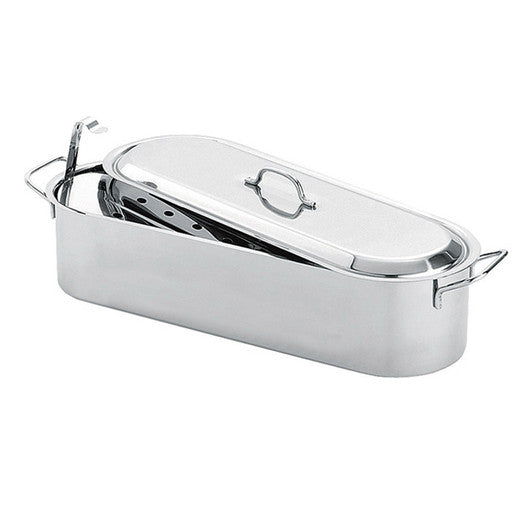
A fish poaching pan is a long, narrow, and shallow cooking pan designed specifically for gently cooking whole fish using the poaching method. In professional kitchens, where precision and consistency matter, these pans are the go-to tool for chefs when preparing elegant fish dishes without overcooking or breaking the fillet.
Whether you're serving whole trout, snapper, or salmon, a fish poaching pan ensures the fish remains moist, delicate, and evenly cooked — making it a favourite in high-end restaurants, hotels, and catering operations across Australia.
Why Use a Fish Poaching Pan in a Commercial Kitchen?
Investing in a dedicated poaching pan delivers measurable benefits for any commercial operation serving fish. Here's why professional chefs rely on this specialised piece of cookware:
1. Ideal Shape for Whole Fish
The elongated, oval shape of a poaching pan is perfect for accommodating whole fish. Unlike standard pans which often can't fit the full length of the fish, poaching pans are purposefully designed to hold large specimens without compromising presentation or cooking quality.
2. Gentle, Even Cooking
Poaching is one of the best methods for cooking delicate proteins like fish. A poaching pan allows for slow, even heat distribution, which helps prevent tearing, overcooking, or drying out. This gentle approach preserves the natural texture and moisture of the fish.
3. Healthier Cooking Option
Poaching doesn't require added oils or fats. Instead, fish is gently cooked in water, stock, wine, or court bouillon — resulting in a light, flavourful, and healthy dish that appeals to health-conscious diners.
4. Keeps Fish Intact for Presentation
Whole fish dishes are often served as a centrepiece. The lift-out tray or rack in many poaching pans lets you remove the fish without it falling apart, ensuring a restaurant-quality presentation every time.
Key Takeaways
- Fish poaching pans are specifically designed for cooking whole fish with precision and care
- The lift-out rack prevents damage during plating, preserving presentation quality
- Poaching is a fat-free cooking method ideal for health-focused menus
- Professional-grade pans are built from stainless steel or aluminium for durability and even heating
Key Features of a Commercial Fish Poaching Pan
When selecting a fish poaching pan for your commercial kitchen, look for these essential features that distinguish professional-grade equipment from domestic alternatives:
- Material: Usually made from stainless steel or aluminium for durability and even heating
- Lift-Out Rack: Prevents sticking and helps remove fish cleanly without breaking the flesh
- Tight-Fitting Lid: Helps retain moisture and heat throughout the cooking process
- Size Range: Typically ranges from 45cm to 70cm, depending on the fish size you plan to cook
- Versatility: Oven and stovetop safe for flexible cooking methods
What Can You Cook in a Fish Poaching Pan?
While designed primarily for whole fish, these versatile pans can handle a variety of delicate cooking tasks in a commercial kitchen:
- Whole salmon, trout, or barramundi
- Delicate fillets for banquets or plated meals
- Infused poached seafood (with wine, herbs, and aromatics)
- Some chefs even use poaching pans to slow-cook vegetables or poultry breasts
The gentle, moist-heat environment created in a poaching pan makes it suitable for any protein or vegetable that benefits from low-temperature cooking. This versatility makes it a valuable addition to your cooking equipment collection.
Fish Poaching Pan Sizes and Specifications
Understanding the size options available helps you select the right pan for your menu and kitchen capacity. Here's a comparison of common commercial poaching pan dimensions:
| Pan Length | Ideal Fish Size | Best For |
|---|---|---|
| 45cm | Up to 40cm | Trout, small snapper |
| 60cm | Up to 55cm | Medium salmon, barramundi |
| 70cm | Up to 65cm | Large whole salmon, banquet service |
Recommended Materials for Commercial Use
At Hospitality Connect, we recommend professional-grade fish poaching pans that are built for frequent, high-volume use. Top-quality options in stainless steel and aluminium offer:
- Heavy-duty stainless steel construction that resists corrosion and maintains appearance
- Detachable poaching racks for easy cleaning and storage
- Excellent value for commercial kitchens with consistent durability
- Even heat distribution across the entire cooking surface
Stainless steel remains the preferred material in professional kitchens due to its non-reactive properties when cooking with wine, citrus, or acidic broths. It's also compatible with induction cooking if you're using induction cooktops in your kitchen.
How to Clean and Maintain a Fish Poaching Pan
Proper maintenance extends the life of your fish poaching pan and ensures food safety standards are met in your commercial kitchen. Follow these care guidelines:
- Hand wash after use, especially if cooking with wine or acidic ingredients that can leave residue
- Avoid abrasive scrubbers to preserve the stainless steel finish and prevent scratching
- Regularly clean and dry the rack or lift-out tray to prevent buildup and maintain hygiene
- For stubborn stains or fish odour, soak with baking soda and warm water overnight
- Dry thoroughly before storage to prevent water spots or potential corrosion
With proper care, a good fish poaching pan can last years of service in a commercial kitchen, making it a worthwhile investment for operations that regularly feature fish on their menu.
Poaching Techniques for Commercial Kitchens
Understanding proper poaching technique maximises the benefits of your fish poaching pan. Here are the essential steps professional chefs follow:
Prepare Your Poaching Liquid
Fill the pan with enough liquid to cover the fish by about 2–3cm. Common poaching liquids include water, fish stock, vegetable stock, white wine, or court bouillon (water flavoured with vegetables, herbs, and wine).
Maintain the Right Temperature
True poaching occurs between 70°C and 80°C — just below simmering. The liquid should show gentle movement but no bubbles. This low temperature prevents the fish from toughening or breaking apart.
Use the Rack Properly
Place the fish on the lift-out rack before lowering it into the liquid. This prevents handling the delicate cooked fish later and ensures clean, damage-free plating.
Monitor Cooking Time
Cooking time varies based on fish thickness. As a general rule, allow 8–10 minutes per 2.5cm of thickness at the thickest point. Fish is done when it reaches an internal temperature of 63°C and flakes easily.
Complementary Equipment for Fish Service
A fish poaching pan works best as part of a well-equipped commercial kitchen. Consider pairing it with these complementary items from your stock pots and cookware collection:
- Large stockpots for preparing poaching liquids and fish stocks
- Fine-mesh skimmers for removing impurities during cooking
- Fish spatulas and serving utensils for delicate handling
- Digital thermometers to monitor poaching liquid and internal fish temperature
Having the right supporting equipment ensures consistent results and streamlines your fish preparation workflow during busy service periods.
Cost Considerations for Commercial Operations
Fish poaching pans represent a moderate investment compared to other commercial kitchen equipment. Pricing typically reflects size, material quality, and construction features:
| Price Range | Features | Suitable For |
|---|---|---|
| Entry Level | Basic aluminium, simple rack | Occasional use, small cafés |
| Mid-Range | Stainless steel, fitted lid, quality rack | Regular use, restaurants |
| Professional | Heavy-gauge stainless, handles, dual racks | High-volume, hotel kitchens |
Consider your menu frequency and volume when selecting your pan. Operations serving fish daily justify investment in professional-grade equipment that delivers consistent performance under demanding conditions.
Final Thoughts
If fish is a staple on your menu, investing in a high-quality fish poaching pan can elevate your dishes, reduce cooking stress, and help deliver consistent results every time. It's a specialised piece of cookware that delivers measurable results — especially when presentation, moisture, and flavour matter most.
The gentle poaching method preserves the delicate texture of fish while infusing subtle flavours from your chosen poaching liquid. For Australian hospitality operations committed to serving exceptional seafood, a professional fish poaching pan is an essential tool that pays dividends in quality and presentation.
Ready to upgrade your commercial kitchen cookware? Explore our full range of professional fry pans, gastronorm pans, and specialised cookware designed for Australian hospitality professionals. Shop now at Hospitality Connect and equip your kitchen with the tools you need to deliver exceptional results.


