

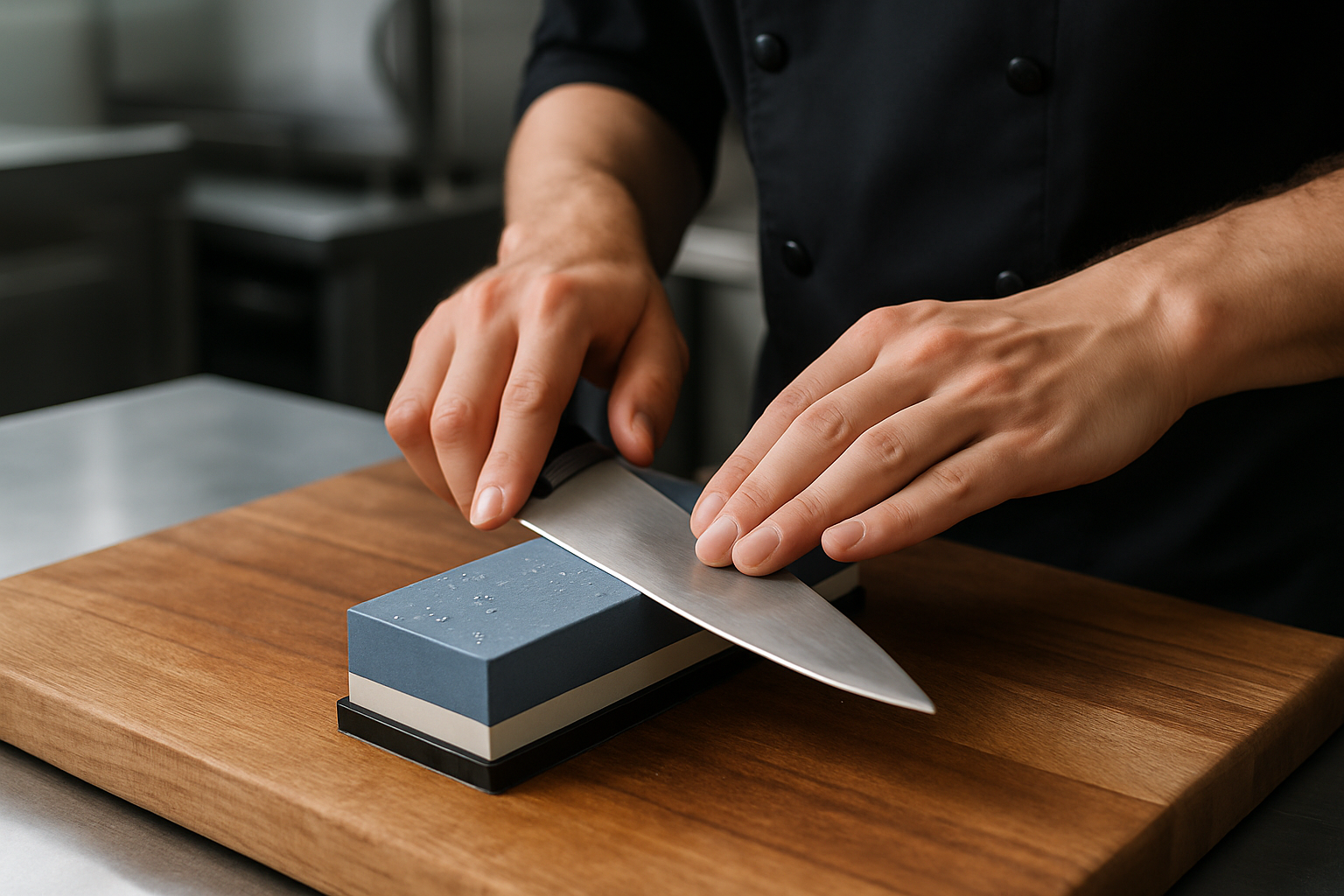
Using a whetstone to sharpen your chef knife is the preferred method among professional chefs and culinary experts. A sharp chef knife is one of the most essential tools in any kitchen. Whether you're slicing, dicing, or mincing, a well-maintained knife ensures precision, safety, and efficiency.
In this complete guide, we'll explain why a whetstone is the best tool for sharpening, provide step-by-step instructions on how to use it, and show you how to maintain premium knife brands like Victorinox, Global, and Wüsthof.
Why Use a Whetstone for Sharpening?
A whetstone (also called a wet stone or water stone) is a flat abrasive stone designed to sharpen and refine the edge of a knife blade. Unlike pull-through sharpeners or electric devices, a whetstone offers more control and precision, preserving the life of your knife and creating a sharper, longer-lasting edge.
Key Takeaways
- Whetstones produce superior sharpness compared to electric sharpeners
- They remove minimal metal, extending blade lifespan
- Whetstone sharpening gives you complete control over edge angle and finish
- A single whetstone can maintain your knives for years with proper care
Benefits of Using a Whetstone
- Superior Sharpness: Produces a finer, razor-sharp edge compared to most manual or electric sharpeners
- Prolongs Knife Life: Removes minimal metal, preserving the blade's shape and structure
- Customizable Edge: Allows you to control the angle and sharpness level to suit your cutting style
- Versatile Use: Suitable for various high-quality knife brands, including your professional chef's knives
- Cost-Effective: A one-time investment that can maintain your knives for years
How to Use a Whetstone to Sharpen Your Chef Knife
Follow these steps for safe and effective sharpening. With practice, you'll develop muscle memory and achieve consistent results every time you sharpen your kitchen knives.
Step 1: Choose the Right Whetstone
Whetstones come in different grit levels, each serving a specific purpose in the sharpening process:
| Grit Level | Purpose | When to Use |
|---|---|---|
| Coarse (200–600) | Repair and reshape | Dull or damaged knives |
| Medium (800–2000) | Regular sharpening | Routine maintenance |
| Fine (3000+) | Honing and polishing | Final edge refinement |
Step 2: Soak the Whetstone
If you're using a water stone, soak it in water for 5–10 minutes until no more bubbles rise to the surface. This ensures smooth sharpening and prevents damage to the blade.
Some synthetic stones don't require soaking—simply splash water on the surface during use. Check your whetstone's instructions before beginning.
Step 3: Set the Correct Angle
Hold your knife at an angle of 15–20 degrees against the stone. Maintaining this angle consistently is crucial for even sharpening across the entire blade edge.
For Japanese-style knives like Global, use a 15-degree angle. For German-style knives like Wüsthof and Victorinox, a 20-degree angle is more appropriate.
Step 4: Sharpen in a Sweeping Motion
Place the knife heel on the stone and draw it toward the tip in a smooth, sweeping motion while applying light to moderate pressure.
Repeat this motion 10–15 times per side, ensuring even sharpening across the entire blade. Use consistent pressure and maintain your chosen angle throughout each stroke.
Step 5: Use Both Sides of the Whetstone
Start with the coarse grit side to shape and restore the edge. Once you've created a burr along the entire blade edge, flip to the finer grit side to polish and refine the blade.
The burr is a thin ridge of metal you can feel on the opposite side of the edge you're sharpening—it indicates you've successfully sharpened all the way to the edge.
Step 6: Rinse and Dry
After sharpening, rinse the blade and stone thoroughly under running water. Dry your knife completely with a clean towel and store it safely using proper knife storage solutions to maintain the edge.
Clean your whetstone after each use to prevent metal particles from clogging the surface. Allow it to air dry completely before storing.
Which Knives Benefit Most from Whetstone Sharpening?
High-quality knives deserve proper care, and whetstones are ideal for premium chef knives. Professional-grade blades respond exceptionally well to whetstone sharpening:
| Knife Brand | Steel Type | Recommended Angle |
|---|---|---|
| Victorinox | Stainless steel | 20 degrees |
| Global | Japanese steel | 15 degrees |
| Wüsthof | High-carbon steel | 20 degrees |
- Victorinox: Known for their sharp, durable stainless steel blades that respond well to whetstone sharpening and hold an edge through heavy commercial use
- Global: Japanese knives with thin, razor-edged blades that benefit from precise, controlled sharpening angles and finer grit stones
- Wüsthof: German knives made with high-carbon steel that hold an edge well when sharpened with a whetstone and proper technique
Using a whetstone ensures you maximize the lifespan and performance of these professional-grade knives, avoiding unnecessary wear from aggressive electric sharpeners that remove excessive metal.
Additional Knife Maintenance Tips
Beyond regular sharpening, proper knife care extends blade life and maintains optimal performance:
Use Proper Cutting Surfaces
Always use quality cutting boards made from wood or plastic. Avoid cutting on glass, marble, or ceramic surfaces, which dull blades quickly.
Hand Wash and Dry Immediately
Never put quality knives in the dishwasher. Hand wash with warm soapy water, dry immediately, and store properly to prevent corrosion and edge damage.
Hone Between Sharpenings
Use a honing steel regularly between whetstone sharpenings to realign the blade edge. This maintains sharpness and extends the time between full sharpening sessions.
Final Thoughts
Yes, you should use a whetstone to sharpen your chef knife. It's the preferred method used by professional chefs worldwide because it provides:
- A sharper, cleaner edge that stays sharp longer
- Extended blade life through minimal metal removal
- Complete control over the sharpening process
- Cost-effective maintenance for premium knives
Brands like Victorinox, Global, and Wüsthof are crafted for precision, and maintaining them with a whetstone ensures they perform at their best for years to come.
Ready to upgrade your commercial kitchen tools? Browse our complete range of professional chef knives and food preparation equipment designed for Australian hospitality businesses. From café setups to full commercial kitchens, we stock everything you need to equip your kitchen for success.


