

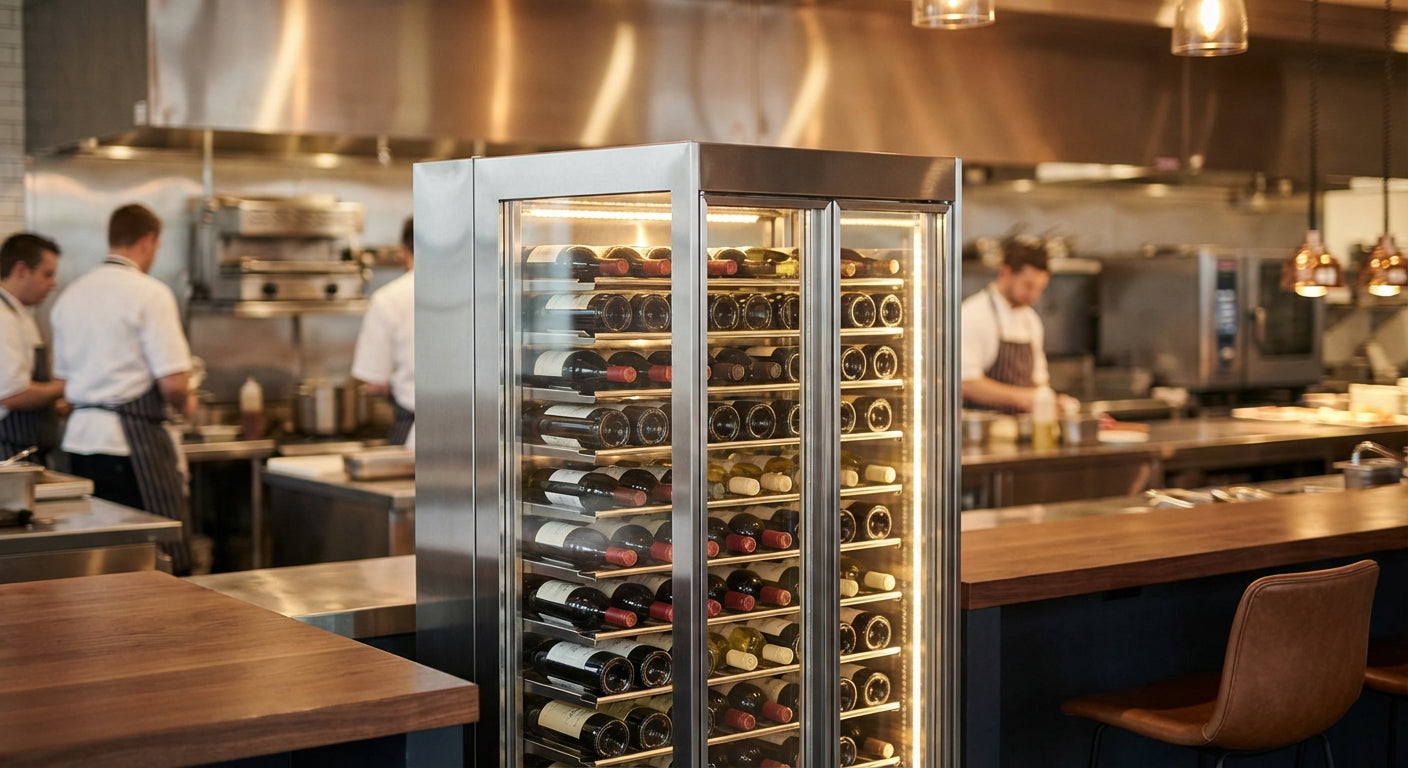
In hospitality, every pour matters. Whether you're serving a bold Shiraz, a chilled Pinot Grigio, or sparkling Prosecco, wine must be stored correctly to maintain flavour, aroma, body, and freshness. Yet one of the most common questions among new hospitality staff—and even some guests—is: do you put wine in the fridge?
The answer is yes, but only under the right conditions.
Different wines require different temperatures, different handling, and different storage methods. Treating all wines the same can lead to dull flavours, premature oxidation, flat bubbles, and disappointed guests—even if the wine itself is high quality.
This guide explains exactly how to store wine correctly in a hospitality setting, why regular kitchen fridges aren't ideal, and how professional wine refrigeration helps venues elevate service, reduce waste, and protect stock.
Key Takeaways
- Use your standard fridge only for short-term storage (1–3 days for open bottles)
- Use wine fridges, coolers, or cellars for long-term storage, including unopened bottles
- Store wine by type—red, white, rosé, sparkling, and fortified wines all have different needs
- Prioritise consistency—fluctuating temperatures destroy wine more than anything else
- Professional wine refrigeration ensures service consistency and protects your investment
Why Standard Kitchen Fridges Are Not Suitable for Wine

A typical kitchen fridge is designed for food preservation, not wine maturity. It is:
- Too cold (often 0–4°C)
- Too dry (dry air shrinks corks)
- Too unstable (vibration disrupts flavour compounds)
- Frequently opened, causing temperature swings
These conditions can cause oxidation, loss of aroma, flattened flavour, weak bubbles in sparkling wines, cork damage, premature ageing, and loss of value in premium bottles.
This is why venues invest in professional wine fridges designed for temperature stability, humidity balance, and vibration-free storage alongside their other commercial refrigeration equipment.
Should Wine Be Refrigerated?
Yes—but it depends on the wine and how long you plan to store it. Wine refrigeration is about protecting flavour, preserving structure, preventing oxidation, and maintaining service consistency.
Sparkling wines, whites, and rosés almost always require chilling. Reds require controlled "cellar temperatures," not typical fridge temperatures. Fortified wines are stable but still benefit from proper storage once opened.
For accurate guidance, here's how each wine type should be stored and served.
How to Store Wine in a Fridge (Smart Short-Term Storage)

Short-term refrigeration helps preserve open bottles. Use a standard fridge only for a few days, and follow these rules:
Store Bottles on Their Side
Keeps corks moist and prevents oxidation. This applies whether storing in a standard fridge or dedicated wine storage unit.
Reseal with a Stopper
A proper wine stopper or vacuum system helps slow oxygen entry and extends the life of opened bottles by 1–2 days.
Limit Storage to 1–3 Days for Most Wines
Wines rapidly oxidise after opening. Even with proper sealing, most wines lose their character within 72 hours in a standard fridge.
Keep Away from Sunlight and Heat
Light damages wine as much as temperature changes. Position bottles away from fridge doors and bright lighting.
For Unopened Bottles
Use only a wine fridge or cellar, never a standard fridge. Unopened bottles require stable, moderate temperatures that kitchen refrigeration cannot provide.
Wine Storage by Type: Temperature and Handling Guide
Each type of wine responds uniquely to temperature, oxygen, and humidity. Understanding these differences is critical for hospitality venues serving diverse wine lists.
| Wine Type | Ideal Storage Temp | After Opening |
|---|---|---|
| Light Reds (Pinot Noir) | 12–15°C | 3–5 days refrigerated |
| Full-Bodied Reds (Shiraz, Cabernet) | 15–18°C | 3–5 days refrigerated |
| White Wines | 7–12°C | 3–4 days refrigerated |
| Rosé | 7–12°C | 3–4 days refrigerated |
| Sparkling | 5–10°C | 1–3 days with proper stopper |
| Fortified (Port, Sherry) | 15–18°C | 2–3 weeks sealed |
Red Wine Storage
Light reds like Pinot Noir are best slightly chilled (12–15°C). Medium to full-bodied reds such as Shiraz, Merlot, and Cabernet Sauvignon should be stored at cellar temperatures (15–18°C).
Store unopened bottles in a wine fridge or cellar, not a kitchen fridge. Opened bottles last 3–5 days if sealed and refrigerated. Allow reds to sit for 10–20 minutes before serving so they warm slightly to release their full flavour profile.
Full-Bodied White Wines
Examples include Sauvignon Blanc, Chardonnay, Viognier, and Pinot Grigio. These wines oxidise easily and are best consumed soon after opening.
Keep chilled but avoid long-term cold storage in standard refrigeration. Expect flavour changes after the first day, even with proper sealing.
Rosé Wine
Always serve rosé well-chilled and store in the fridge before service. Do not age long-term, as rosé is meant for fresh consumption. Opened bottles last 3–4 days when properly sealed.
Sparkling Wine
Sparkling wines must be cold for best bubble retention. Keep on ice during service and use specialised sparkling wine stoppers to maintain carbonation.
Opened bottles last 1–3 days with a proper stopper. Temperature consistency is critical—any warmth accelerates bubble loss.
Cabernet Sauvignon and Other Premium Reds
Store at 15–18°C and never store long-term in a kitchen fridge. Keep in a dedicated wine fridge to preserve ageing potential and protect your investment in premium bottles.
Fortified Wines (Port, Sherry, Marsala)
Very stable due to higher alcohol content and do not require refrigeration when unopened. After opening, refrigerate or store in a cool, dark place. These wines last 2–3 weeks when sealed, making them excellent options for bars and venues with slower wine service.
Smart Handling to Preserve Wine Quality

Oxidation is the biggest enemy of open wine. Proper handling extends wine life and protects flavour integrity.
Hospitality guidelines include:
- Always reseal bottles with quality stoppers
- Refrigerate opened wines (except some reds which can stay at cellar temperature)
- Rotate stock to minimise waste
- Avoid temperature swings
- Keep wine upright only during service—store sideways otherwise
Correct handling ensures every glass meets your venue's standards and reduces the costly waste that comes from spoiled inventory.
Match Storage to Consumption: Short-Term vs Long-Term
Understanding the difference between short-term and long-term storage needs helps you select the right equipment for your venue.
Short-Term (Hours to Days)
For immediate service needs, use standard fridges, ice buckets, wine buckets, or frozen grapes for cooling without dilution. This approach works for bottles that will be consumed within 1–3 days.
Long-Term (Weeks to Years)
For inventory protection and ageing, use wine fridges, wine coolers, or wine cellars. These provide the essential stability needed for commercial ageing, protecting:
- Cork moisture levels
- Humidity control (typically 50–70%)
- Temperature consistency
- Bottle integrity
- Investment value
Professional wine storage is as critical to your operation as other commercial kitchen equipment, directly impacting product quality and customer satisfaction.
Never Expose Wine to Temperature Fluctuations

Wine dislikes change more than anything else. Repeatedly moving bottles in and out of the fridge accelerates oxidation and dulls flavour.
Keep bottles in a constant-temperature fridge, away from fridge doors, protected from heat and light, and stored until service. Consistency equals predictable flavour, which equals satisfied customers.
Wine Storage Best Practices for Hospitality Venues
- Invest in dedicated wine refrigeration for unopened inventory
- Use standard refrigeration only for opened bottles consumed within 1–3 days
- Train staff on proper handling, sealing, and rotation procedures
- Monitor and log storage temperatures daily
- Position wine storage away from heat sources and high-traffic areas
- Implement FIFO (first in, first out) stock rotation
Essential Wine Storage Equipment for Your Venue
Beyond wine fridges, successful wine programmes require complementary equipment and storage solutions.
Consider pairing your wine refrigeration with stainless steel work benches for preparation areas, commercial shelving for dry storage of wine accessories, and proper wine glasses to complete the service experience.
Temperature control extends beyond wine to all aspects of hospitality operations. Venues should also consider blast chillers for rapid cooling needs and comprehensive refrigeration solutions.
Common Wine Storage Questions Answered
Can you keep wine in a regular fridge before it's opened?
Only short-term. Kitchen fridges are too cold and too dry for safe long-term storage. Commercial venues should use a wine fridge or cellar for all unopened inventory.
What wine should not be refrigerated?
Full-bodied reds and wines intended for long-term ageing should not be stored in standard refrigeration. Cold temperatures dull flavours and dry corks, damaging both taste and bottle integrity.
Is it OK to put ice in red wine?
Acceptable in casual settings, but ice dilutes flavour and is not recommended for quality service. Use frozen grapes to chill without dilution if you must cool wine quickly.
What is the ideal time to serve red wine?
When it has breathed for a few minutes and reached its ideal serving temperature (typically 15–18°C for full-bodied reds, 12–15°C for lighter varieties). Proper timing enhances balance, aroma, and mouthfeel.
Conclusion: Proper Wine Storage Protects Your Investment
So—do you put wine in the fridge? Yes, but only the right wines, at the right time, and in the right type of fridge.
Correct wine storage preserves the wine's natural character, protects your venue's investment, and ensures every guest enjoys the best version of the bottle you serve. Temperature control, humidity management, and vibration reduction are not luxury considerations—they're essential operational requirements.
At Hospitality Connect, we understand how proper storage affects flavour, waste, and service quality. With the right approach and professional equipment, your venue can deliver perfectly stored wine, glass after glass, maintaining the standards your customers expect.
Ready to upgrade your wine storage? Explore our range of professional wine fridges and commercial refrigeration solutions designed specifically for Australian hospitality venues. Protect your inventory, reduce waste, and elevate your wine service with equipment built for consistent performance.


