

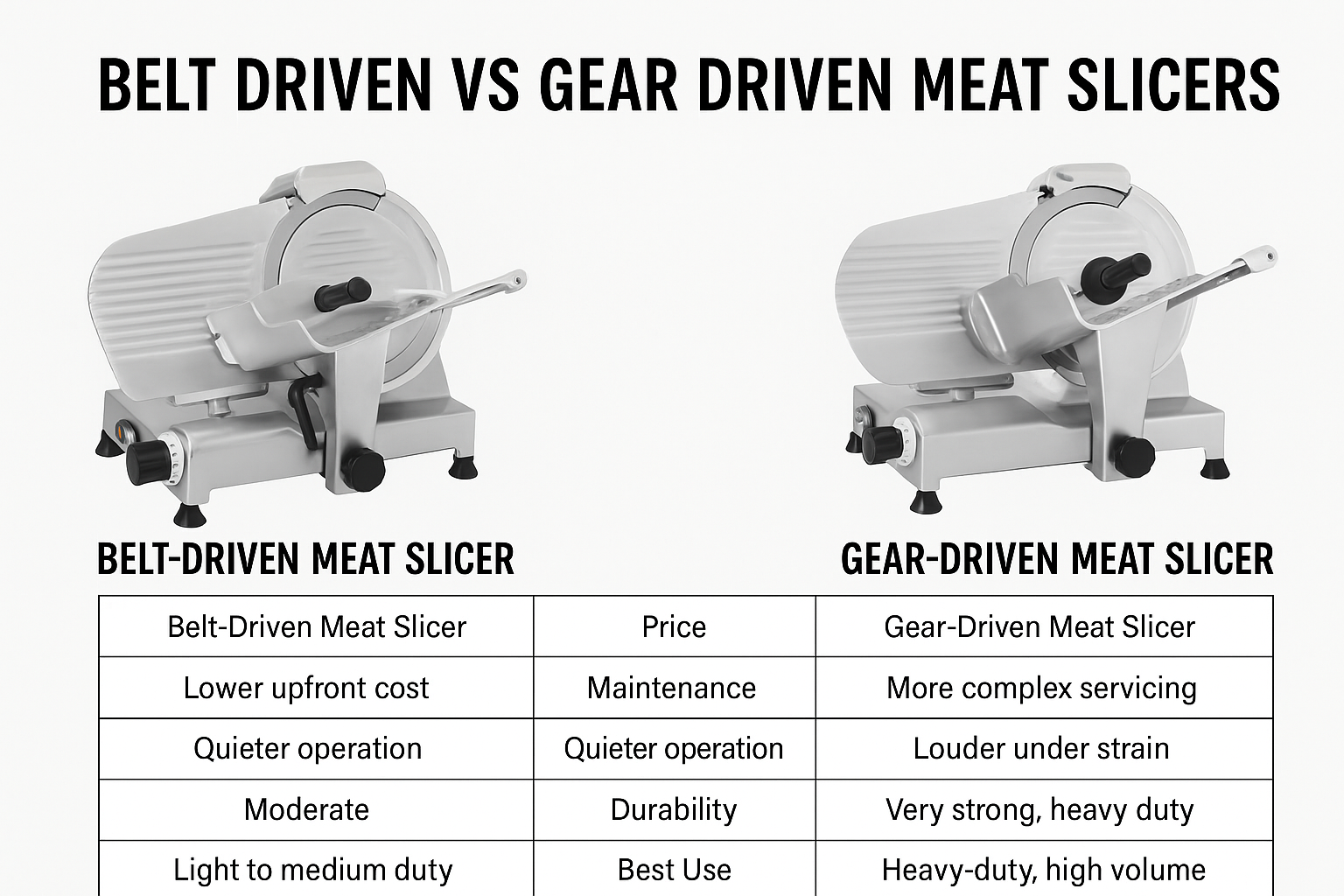
When choosing the right meat slicer for your Australian butchery or deli, one of the most critical decisions is whether to invest in a belt-driven or gear-driven model. Both types of commercial slicers have distinct advantages, but the right choice depends on your business needs, usage frequency, and the type of slicing tasks you handle daily.
In this comprehensive guide, we'll break down the key differences between belt-driven and gear-driven meat slicers, helping you make an informed decision for your commercial kitchen.
Understanding Belt-Driven Meat Slicers
A belt-driven meat slicer uses a motor connected to the blade through a belt and pulley system. This indirect power transmission creates a smoother, quieter operation that's ideal for certain commercial environments.
Key Benefits of Belt-Driven Slicers
Quieter Operation: The belt system absorbs vibration and runs smoothly with significantly less noise than gear-driven models. This makes belt-driven slicers perfect for front-of-house operations where customer experience matters.
Lower Initial Investment: Belt-driven models typically cost less upfront, making them an attractive option for new businesses or those working with tighter budgets when outfitting their food preparation area.
Simple Maintenance: When a belt wears out after extended use, it's straightforward and affordable to replace. Most operators can handle basic belt maintenance without requiring specialist technicians.
Light to Medium Duty Performance: These slicers excel in cafés, small delis, and butcher shops with moderate slicing requirements. They handle daily slicing tasks efficiently without the need for heavy-duty industrial capacity.
Understanding Gear-Driven Meat Slicers
A gear-driven meat slicer uses direct gears between the motor and blade assembly, creating a more powerful and robust cutting mechanism. This direct power transmission delivers superior performance for demanding commercial applications.
Key Benefits of Gear-Driven Slicers
Heavy-Duty Power: Gear-driven slicers handle continuous slicing operations with ease, maintaining consistent performance even during peak service periods in busy commercial kitchens.
Superior Torque: The direct gear connection provides exceptional torque, making these slicers ideal for slicing tougher meats, dense cheeses, and even partially frozen products that would strain a belt-driven model.
Exceptional Durability: Gears are built to last and can withstand years of high-volume commercial use. When properly maintained, these slicers can serve your business for decades.
Minimal Slippage: The direct mechanical connection ensures consistent slicing performance under heavy loads, with no belt stretch or slippage to affect precision.
Belt-Driven vs Gear-Driven: Side-by-Side Comparison
To help you make the right decision for your meat slicer purchase, here's a detailed comparison of both drive systems across the factors that matter most to commercial operators.
| Feature | Belt-Driven Slicer | Gear-Driven Slicer |
|---|---|---|
| Initial Cost | Lower upfront investment | Higher initial cost |
| Maintenance | Belt replacement needed periodically | More complex servicing required |
| Noise Level | Quieter operation | Louder under heavy load |
| Durability | Moderate longevity | Very strong, heavy-duty construction |
| Cutting Power | Suitable for standard slicing | Superior torque for tough products |
| Best Application | Light to medium duty use | Heavy-duty, high-volume operations |
Choosing the Right Drive System for Your Business
The decision between belt-driven and gear-driven meat slicers ultimately comes down to understanding your operational requirements and usage patterns.
When to Choose Belt-Driven
Opt for a belt-driven slicer if you operate a café, small deli, or boutique butcher shop where slicing occurs intermittently throughout the day. These models are also ideal if you're working within a defined budget and need reliable performance without the premium price of industrial-grade equipment.
Belt-driven slicers excel in environments where noise control matters, such as open kitchens or front-of-house service areas where customers can see and hear operations.
When to Choose Gear-Driven
Select a gear-driven slicer if you run a high-volume butcher shop, supermarket deli, or busy restaurant where the slicer operates continuously during service hours. The investment in a gear-driven model pays off through superior longevity and consistent performance under demanding conditions.
These models are essential when you regularly slice tougher products like salami, hard cheeses, or semi-frozen meats that require extra cutting power and torque.
Key Takeaways
- Belt-driven slicers cost less upfront and run quieter, making them ideal for light to medium-duty operations
- Gear-driven slicers deliver superior power and durability for high-volume commercial kitchens
- Consider your daily slicing volume, product types, and budget when choosing between drive systems
- Both types require proper maintenance to ensure food safety compliance and optimal performance
- The right slicer improves efficiency, reduces waste, and enhances product presentation
Why Australian Businesses Trust Brice Meat Slicers
Brice Meat Slicers combine Italian engineering excellence with the durability Australian commercial kitchens demand. Whether you need a belt-driven or gear-driven model, Brice offers solutions that deliver consistent performance year after year.
Brice Belt-Driven Models
Brice belt-driven slicers are perfect for cafés and smaller delis looking for reliable, budget-friendly performance. These models incorporate thoughtful design features that simplify cleaning and maintenance while meeting Australian food safety standards.
Brice Gear-Driven Models
Built for butchers and supermarkets that demand robust, long-lasting performance, Brice gear-driven slicers handle heavy workloads without compromising on precision or safety. These industrial-grade machines are designed to operate reliably for decades with proper care.
Safety and Hygiene Features
All Brice slicers feature easy-to-clean designs with removable components that meet stringent food safety regulations. Safety guards, blade covers, and emergency stops come standard across the range.
Maintenance Considerations for Both Drive Types
Regardless of which drive system you choose, proper maintenance is essential for food safety, performance, and longevity. Understanding the maintenance requirements helps you budget accurately for ongoing operations.
Belt-Driven Maintenance
Belt-driven slicers require periodic belt inspections and eventual replacement. Signs of belt wear include squealing noises, reduced cutting power, or visible cracking. Replacement belts are inexpensive and installation is straightforward.
Regular cleaning of the belt housing prevents food debris buildup that can accelerate wear. Most operators can handle routine maintenance in-house without specialized technical knowledge.
Gear-Driven Maintenance
Gear-driven slicers need regular lubrication of the gear mechanism to maintain smooth operation. While the gears themselves rarely fail, proper lubrication prevents premature wear and maintains optimal performance.
These models typically require annual professional servicing to inspect gears, adjust tolerances, and ensure all safety mechanisms function correctly.
Cost Analysis: Initial Investment vs Long-Term Value
When comparing costs between belt-driven and gear-driven slicers, consider both the initial purchase price and the total cost of ownership over the equipment's lifespan.
Belt-driven slicers offer lower entry costs and simpler maintenance, making them cost-effective for businesses with moderate slicing needs. However, in high-volume operations, the superior durability of gear-driven models often delivers better long-term value despite the higher initial investment.
Calculate your expected daily slicing volume and product types to determine which option provides the best return on investment for your specific operation.
Making Your Final Decision
The choice between a belt-driven meat slicer and a gear-driven meat slicer comes down to honest assessment of how often and how heavily you'll use the machine in your daily operations.
For light to medium slicing needs in cafés, small delis, or specialty food shops, a belt-driven slicer delivers cost-effective performance with easy maintenance. These models handle standard slicing tasks efficiently while keeping noise levels low.
For heavy-duty professional slicing in butcher shops, supermarkets, or high-volume restaurants, a gear-driven slicer offers unmatched power, durability, and reliability. The premium investment pays dividends through years of dependable service.
With Brice Meat Slicers, you can find the perfect balance of quality, performance, and value – ensuring your commercial kitchen equipment delivers consistent results that meet the demanding standards of Australian hospitality and food service businesses.
Ready to Choose Your Commercial Meat Slicer?
Selecting the right meat slicer is an important investment in your business operations. Whether you need the quiet efficiency of a belt-driven model or the industrial power of a gear-driven slicer, choosing quality equipment designed for Australian commercial kitchens ensures years of reliable performance.
Explore the full range of commercial food processors and preparation equipment to outfit your kitchen with professional-grade tools that deliver consistent results, improve efficiency, and meet food safety standards.
Consider pairing your new slicer with complementary food storage containers and stainless steel work benches to create an efficient, hygienic food preparation workspace that supports your business growth.


