

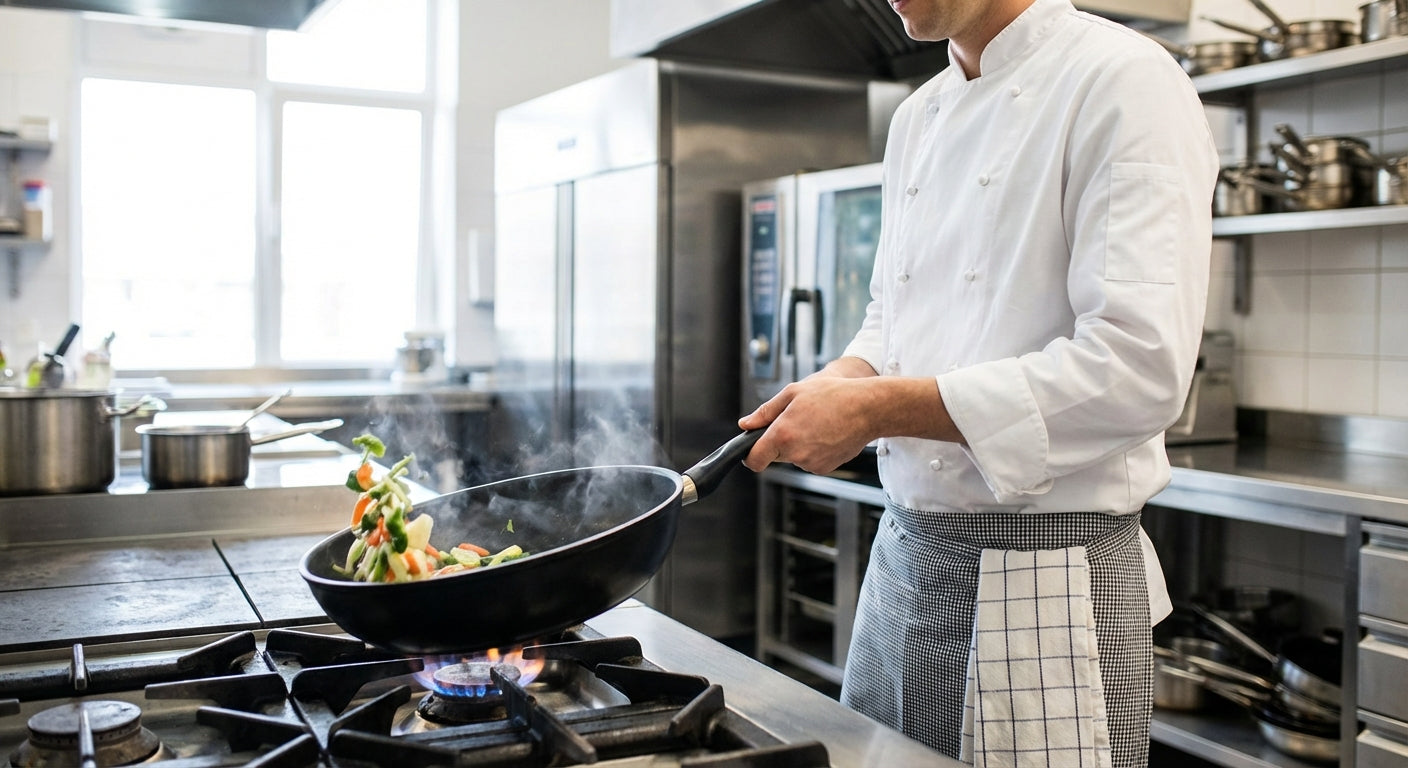
If you've ever wondered are non-stick pans toxic, you're not alone. For over a decade, concerns about Teflon and non-stick coatings have left home cooks and professional chefs questioning the safety of their cookware. With so much conflicting information online, it's time to separate fact from fiction.
This comprehensive guide covers everything you need to know about Teflon, PTFE, and PFOA, backed by scientific research and updated Australian regulations.
Key Takeaways
- Modern non-stick pans sold in Australia are PFOA-free and safe for everyday cooking
- PTFE (Teflon) itself is not toxic when used at normal cooking temperatures below 260°C
- PFOA, the dangerous chemical once used in manufacturing, has been phased out globally since 2013
- Cast iron offers a natural, chemical-free alternative that lasts for generations
What Is Teflon?
To understand whether non-stick cookware poses any health risks, you first need to understand what the coating actually is.
Teflon is a brand name for a non-stick coating made from polytetrafluoroethylene (PTFE). Discovered by DuPont in 1938, PTFE became the world's most popular non-stick material thanks to its exceptional heat resistance and low-friction properties.
Over time, "Teflon" became a catch-all term for any PTFE-based coating, even when manufactured by other brands.
Is PTFE Toxic?
Let's cut straight to what modern research actually tells us about PTFE safety:
PTFE Is Not Classified as Carcinogenic
Authoritative health organisations, including the American Cancer Society, confirm that PTFE itself is not known to cause cancer. There is no credible scientific evidence linking PTFE exposure to cancer risk in humans.
PTFE Remains Stable at Normal Cooking Temperatures
Understanding the temperature thresholds is critical for safe use:
| Temperature | PTFE Behaviour |
|---|---|
| Under 260°C | Safe and stable—no degradation occurs |
| 260°C–350°C | Begins to degrade—avoid prolonged exposure |
| Above 350°C | Decomposes and releases fumes—unsafe |
If significantly overheated, PTFE can release fumes that may cause polymer fume fever—a temporary flu-like condition. Symptoms typically resolve within 24–48 hours, and cases from cookware use are exceptionally rare.
Most Home Cooking Stays Well Below Dangerous Temperatures
Typical stovetop cooking ranges between 160°C and 230°C. This means everyday use of non-stick fry pans does not usually reach temperatures where PTFE breaks down.
So why all the fear surrounding Teflon? The real issue was never PTFE itself—it was a chemical called PFOA that was once used during manufacturing.
PFOA and the Teflon Controversy

PFOA (perfluorooctanoic acid) was previously used as an emulsifier during PTFE coating production. Although manufacturers intended to eliminate it during processing, trace amounts remained in some finished cookware.
This is where the toxicity concerns originated.
Health Concerns Associated with PFOA
Research linked PFOA exposure to several serious health risks:
- Possible cancer risk
- Immune system disruption
- Thyroid dysfunction
- Developmental effects in children
The International Agency for Research on Cancer (IARC) classified PFOA as "possibly carcinogenic to humans." This classification sparked widespread concern about Teflon cookware safety.
Is PFOA Still Used Today?
The good news: No, PFOA is no longer used in non-stick cookware.
Global Regulations Have Eliminated PFOA
Over the past 15 years, PFOA has been systematically phased out worldwide:
- European Union: Restricted PFOA for consumer use in 2008
- United States: Major manufacturers phased out PFOA from Teflon production by 2013
- Australia: PFOA was never manufactured domestically, and a complete ban on importation and use began 1 July 2025
According to the Australian Industrial Chemicals Introduction Scheme, modern non-stick cookware sold in Australia has been PFOA-free for years.
What This Means for Australian Hospitality Businesses
Modern commercial cookware sold in Australia is PFOA-free and safe for professional kitchen environments when used according to manufacturer guidelines.
Are Non-Stick Pans Toxic?

For Australian consumers and commercial kitchens, the answer is clear:
No—modern non-stick pans are not considered toxic when used correctly.
Safe Use Guidelines for Non-Stick Cookware
To maximise safety and longevity, follow these best practices:
- Always choose PFOA-free cookware from reputable suppliers
- Avoid preheating empty pans—always add oil or food first
- Use low to medium heat for optimal cooking results
- Never use metal utensils that can scratch the coating
- Replace pans with heavily scratched or damaged surfaces
- Ensure proper kitchen ventilation during cooking
When to Replace Non-Stick Cookware
- Visible peeling, chipping, or flaking of the coating
- Deep scratches exposing the metal beneath
- Discolouration or warping from overheating
- Food starts sticking despite proper use and cleaning
Cast Iron: A Natural Alternative to Non-Stick Cookware

If you prefer cookware without any synthetic coatings whatsoever, cast iron remains the gold standard for durability and safety.
Why Cast Iron Is the Safest Cookware Choice
Cast iron offers multiple advantages over modern non-stick alternatives:
- Naturally non-stick surface when properly seasoned
- Exceptional heat retention and distribution
- Zero chemical coatings of any kind
- Safe for extremely high temperatures, including oven use
- Lasts for decades—often passed down through generations
- Actually improves with age and use
For commercial kitchens, cast iron cookware provides unmatched durability and heat performance without any concerns about coating degradation.
Cast Iron vs Non-Stick: Quick Comparison
| Feature | Cast Iron | Non-Stick |
|---|---|---|
| Coating | None—natural seasoning | PTFE synthetic coating |
| Heat Tolerance | Extremely high (oven-safe) | Limited to 260°C |
| Lifespan | Lifetime—often generations | 3–5 years with care |
| Maintenance | Requires seasoning | Minimal maintenance |
Explore Professional-Grade Cast Iron at Hospitality Connect
At Hospitality Connect, we supply high-quality cookware suitable for home kitchens, cafés, restaurants, and commercial food preparation environments across Australia.
Our range includes cast iron skillets, Dutch ovens, griddles, and specialty pans designed for both durability and performance.
Final Verdict: Should You Worry About Non-Stick Pans?

For Australian households and commercial kitchens, modern non-stick cookware is safe to use when it meets these criteria:
- Certified PFOA-free by the manufacturer
- Used at appropriate cooking temperatures (below 260°C)
- Maintained properly and replaced when damaged
The health concerns that fuelled the "Teflon scare" were valid—but they applied to older cookware manufactured with PFOA. That chemical has been eliminated from the production process for over a decade.
However, if you prefer a completely natural, chemical-free cooking surface with superior longevity, cast iron cookware remains one of the healthiest and most versatile options available.
Shop Safe, High-Quality Cookware at Hospitality Connect
Whether you're outfitting a home kitchen or a busy commercial operation, Hospitality Connect offers a curated range of professional-grade cookware designed for Australian conditions.
Browse our full selection of cookware, cast iron products, and cooking equipment—all backed by expert advice and Australia-wide shipping.
Have questions about cookware safety or need help choosing the right products for your kitchen? Our team is here to help you make informed decisions based on your specific cooking needs.


