

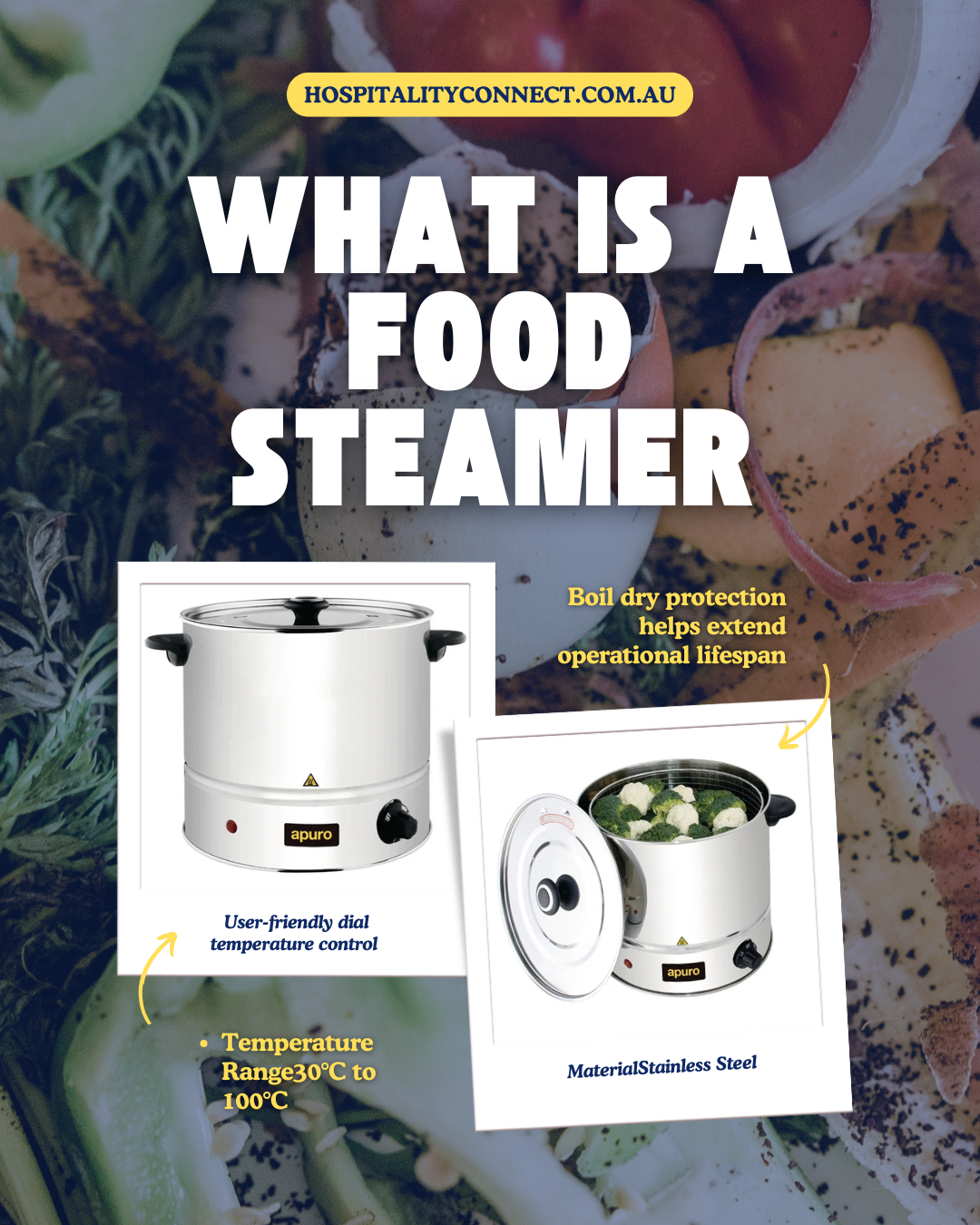
A commercial food steamer is an essential appliance in modern Australian commercial kitchens—from restaurants and cafés to catering operations and institutional foodservice. Designed to cook food using hot steam rather than oil or direct heat, steamers offer healthier results while preserving natural flavours, textures, and vital nutrients.
At Hospitality Connect, we supply a full range of high-performance commercial steamers built to withstand the demands of busy service environments. Whether you're steaming vegetables, dumplings, seafood, or rice, these machines help chefs deliver consistent, high-quality results every time.
Key Takeaways
- Food steamers cook using hot steam, eliminating the need for oils and fats
- Regular maintenance extends equipment lifespan and ensures food safety compliance
- Daily cleaning and weekly descaling are essential maintenance tasks
- Proper water filtration prevents scale buildup and equipment damage
- Professional annual servicing keeps your steamer operating at peak performance
Benefits of a Commercial Food Steamer
Food steamers are increasingly favoured in the Australian hospitality industry for several compelling reasons. Understanding these benefits helps kitchen managers make informed equipment decisions.
Healthier Cooking Method
Steaming doesn't require oils or fats, making it a perfect method for health-conscious menus. This cooking technique appeals to customers seeking nutritious dining options without compromising on taste.
Superior Nutrient Retention
Steamed foods maintain significantly more vitamins and minerals than foods that are fried or boiled. Water-soluble nutrients like vitamin C and B vitamins remain largely intact during the gentle steam cooking process.
Efficiency in Bulk Cooking
Commercial food steamers can cook large volumes of food evenly and quickly—ideal for prep-heavy kitchens. Multiple trays allow you to steam different ingredients simultaneously, dramatically improving kitchen workflow during peak service times.
Versatile Cooking Applications
Steamers are not just for vegetables. They're excellent for seafood, rice, buns, eggs, dumplings, and even reheating prepared dishes. This versatility makes them a worthwhile investment for diverse menu offerings.
| Food Type | Typical Steaming Time | Best Results |
|---|---|---|
| Green vegetables | 3–5 minutes | Bright colour, crisp texture |
| Fish fillets | 6–8 minutes | Moist, flaky texture |
| Rice (white) | 15–20 minutes | Fluffy, separate grains |
| Dumplings | 8–12 minutes | Tender, not waterlogged |
| Root vegetables | 12–15 minutes | Fork-tender consistency |
How to Maintain a Commercial Food Steamer
To get the most out of your investment and ensure food safety compliance, it's essential to follow a consistent maintenance routine. Proper care prevents costly breakdowns and extends the operational life of your cooking equipment.
Daily Cleaning Protocol
Wipe down the exterior: Use a food-safe cleaner to remove grease, condensation, and fingerprints. This prevents buildup and maintains professional appearance standards in your kitchen.
Empty and rinse the water reservoir: This simple step prevents scale buildup and bacterial growth. Always empty the reservoir at the end of each service period.
Clean the interior compartments: Use a damp cloth or approved non-abrasive detergent to remove food particles and condensation. Pay special attention to corners where residue accumulates.
Weekly Descaling (or as needed)
Use a commercial descaling solution to remove limescale from internal components. Hard water in many Australian regions makes descaling critical for maintaining steam generation efficiency.
Always follow the manufacturer's instructions and rinse thoroughly before returning the unit to service. Residual descaling chemicals can affect food flavour and safety.
Regular Seal and Gasket Inspection
Inspect door gaskets regularly for wear, cracks, or food residue. Damaged seals reduce efficiency by allowing steam to escape, increasing cooking times and energy consumption.
Clean rubber seals with warm soapy water to ensure tight closure and efficient steam generation. Replace gaskets immediately if they become brittle or cracked.
Drip Tray and Drain Line Maintenance
Drip trays can fill quickly, especially in high-use kitchens. Empty and clean them daily to prevent overflow and eliminate potential bacterial breeding grounds.
If your steamer has a drainage system, flush it weekly to prevent clogs and unpleasant odours. Blocked drains are one of the most common service call reasons.
Professional Servicing Schedule
Just like other benchtop equipment, commercial steamers need professional maintenance. Schedule an annual service to inspect heating elements, pressure valves, thermostats, and electronic controls.
Professional technicians can identify worn components before they fail, preventing unexpected downtime during busy service periods.
Common Food Steamer Mistakes to Avoid
Understanding what not to do is just as important as knowing proper maintenance procedures. These common mistakes can significantly reduce your steamer's lifespan and performance.
Using hard tap water: Unfiltered tap water accelerates scale buildup in steam generators. Install a water filtration system or use filtered water to protect your investment.
Skipping regular descaling: This leads to reduced steam output, longer cooking times, and eventual component failure. Descaling frequency depends on your water hardness and usage volume.
Overloading the trays: Cramming too much food onto trays reduces airflow and results in uneven cooking. Always leave space between items for proper steam circulation.
Neglecting door seal maintenance: Worn seals waste energy and extend cooking times. Check seals weekly and budget for replacement every 12–18 months depending on usage.
Ignoring unusual noises or performance changes: Strange sounds, reduced steam output, or longer cooking times indicate developing problems. Address issues promptly to avoid major repairs.
Choosing the Right Steamer for Your Kitchen
Different kitchen operations require different steamer configurations. Understanding your options helps you select equipment that matches your specific needs.
| Steamer Type | Best For | Capacity |
|---|---|---|
| Benchtop steamer | Cafés, small restaurants | 1–3 compartments |
| Floor model steamer | High-volume kitchens | 3–6 compartments |
| Pressure steamer | Fast-paced operations | Cooks 50% faster |
| Combination oven-steamer | Versatile cooking needs | Variable capacity |
Consider your menu requirements, available space, and peak service volume when selecting equipment. A combi oven might offer more versatility if you need both steaming and dry heat cooking capabilities.
Integration with Your Kitchen Workflow
A commercial food steamer works best when integrated thoughtfully into your overall kitchen design. Position it near your food preparation area for efficient workflow.
Ensure adequate ventilation and drainage connections during installation. Proper infrastructure prevents moisture problems and maintains comfortable working conditions for kitchen staff.
Pair your steamer with appropriate gastronorm pans that fit your specific model. Using correctly sized pans maximizes capacity and ensures even heat distribution.
Final Thoughts
A commercial food steamer is a smart, efficient, and health-forward addition to any professional kitchen. With proper use and routine maintenance, it can serve your kitchen reliably for years while helping you meet growing customer demand for healthier menu options.
The investment in regular maintenance pays dividends through reduced energy costs, fewer service calls, and consistent food quality that keeps customers returning.
At Hospitality Connect, we stock premium food steamers from trusted brands—designed specifically for Australian hospitality businesses. Whether you need a compact benchtop unit for a small café or a heavy-duty floor model for high-volume production, we've got a solution that fits your kitchen.
Ready to upgrade your kitchen with a commercial food steamer? Browse our complete range of commercial steamers or contact our equipment specialists for personalised recommendations based on your specific operational needs.


